
Naturespirit Herbs

Wildcrafted Sea Vegetables, Herbs and Herbal Products Since 1990

P.O. Box 150 Williams OR 97544 www.naturespiritherbs.com


Welcome to our website!

To order by phone call (541) 846-7995
Our business hours are Monday through Friday
8:00 am to 5:00 pm Pacific Time

To contact us by email click below
orders@naturespiritherbs.com
Please do not send us your credit card info!
We do not accept credit cards or online payment at this time.


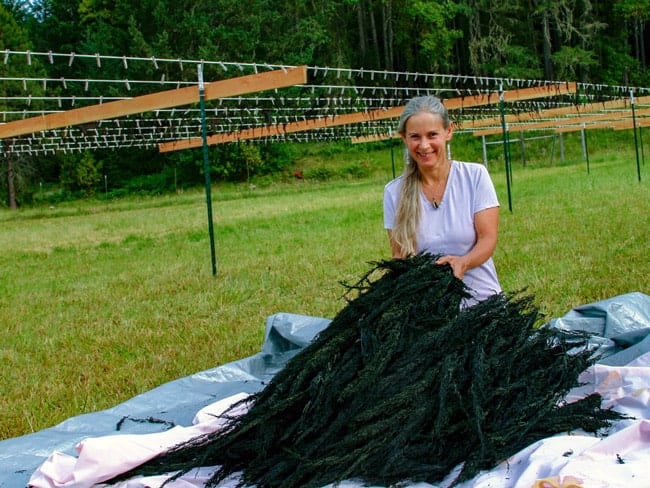
Naturespirit Herbs LLC is our family business, located at our home in the Siskiyou Mountains of southwestern Oregon. We are harvesters of edible and medicinal wild seaweeds, herbs and mushrooms. We are also clinical herbalists and producers of high quality herbal medicines. We harvest and process almost everything we sell with our own hands, in a respectful, ecologically sound way. We truly enjoy our work, and diligently strive to produce the highest possible quality in our products. Please check out our website, and feel free to call or email us with any questions!

                                                                                               Health and Happiness,

                                                                                    James Jungwirth & Kari Rein


Downloads


Catalogs and Photos


Naturespirit Herbs 2009 Retail Catalog (PDF file)


Naturespirit Herbs 2009 Wholesale Catalog (PDF file)


Wildcrafted Herbs Pricelist 2009 (PDF file)


Photos


Articles by Dr. Ryan Drum


Medicinal Uses of Seaweeds (PDF file)


Thyroid Function and Dysfunction (PDF file)


Environmental Origins of Thyroid Disease Part 1 (PDF file)


Environmental Origins of Thyroid Disease Part 2 (PDF file)


Designed by Heartwork

Copyright(C)2008 by Naturespirit Herbs LLC

Last Modified: February 6, 2008


Naturespirit Herbs™
Wildcrafted Sea Vegetables, Herbs and Herbal Products Since 1990
James Jungwirth & Kari Rein • P.O. Box 150 • Williams OR 97544
www.naturespiritherbs.com
2006 Retail Catalog
Our wildcrafted herbs list is available upon request
To order by phone call (541) 846-7995
Business hours are Monday through Friday
8:00 am to 5:00 pm Pacific Time
10%discount on all orders of $60.00 or more
We are harvesters of wild sea vegetables and medicinal herbs, as well as clinical herbalists and producers of high quality herbal
medicines. Naturespirit Herbs is our family business, located at our home in the Siskiyou Mountains of southwestern Oregon. We
offer a wide selection of bulk, packaged and encapsulated sea vegetables as well as herbal extracts, formulas, oils, salve, liniment etc.
We harvest and process almost everything we sell with our own hands, in a respectful, ecologically sound way. We truly enjoy our
work, and diligently strive to produce the highest possible quality in our products. Please check out our catalog, and feel free to call us
with any questions!
Health and happiness,
James & Kari
About Our Sea Vegetables
‘Sea vegetables’ is a term for edible seaweeds or marine algae. These amazing sea plants are regarded as delicious and health-giving
foods by coastal cultures all around the world. In the United States, increasing numbers of people are learning that eating sea
vegetables regularly provides a broad range of health benefits.
Sea vegetables are some of the most nutritionally valuable foods on earth. They are without doubt the best natural source of essential
minerals, trace minerals and electrolytes. Eating sea vegetables is especially important today because modern chemical farming,
depleted soils and processed foods have resulted in widespread mineral-deficiency-caused diseases. For example, the abundance of
potassium and other minerals in sea vegetables often helps with blood sugar problems and nervous system disorders such as
hyperactivity, ADD, depression and insomnia. The high iodine content of many seaweeds has been used worldwide to treat
underactive thyroid conditions, goiter, obesity etc. Sea vegetables are also a great source of all the known vitamins (including B12),
therapeutic polysaccharides (algin, agar, carrageenan, fucoidan, laminaran, porphyran etc), lignans, antioxidants and melatonin.
Modern research has shown that eating sea vegetables can remove radioactive and heavy metals from our bodies, prevent or inhibit
many kinds of cancer and reduce high blood pressure, high cholesterol levels and arteriosclerosis. Additional seaweed and health
information can be found at our website.
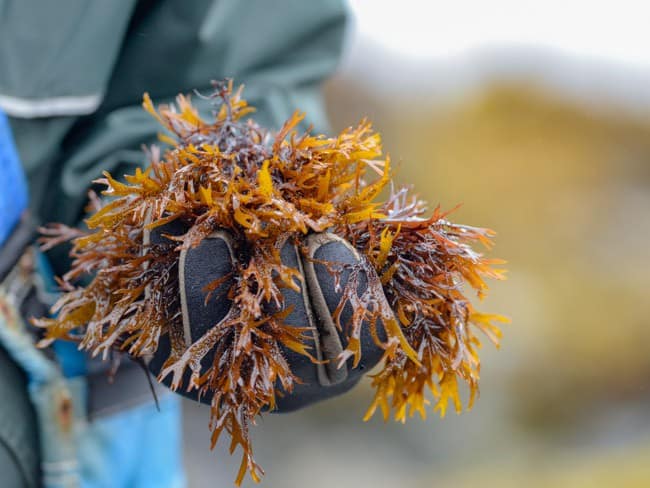
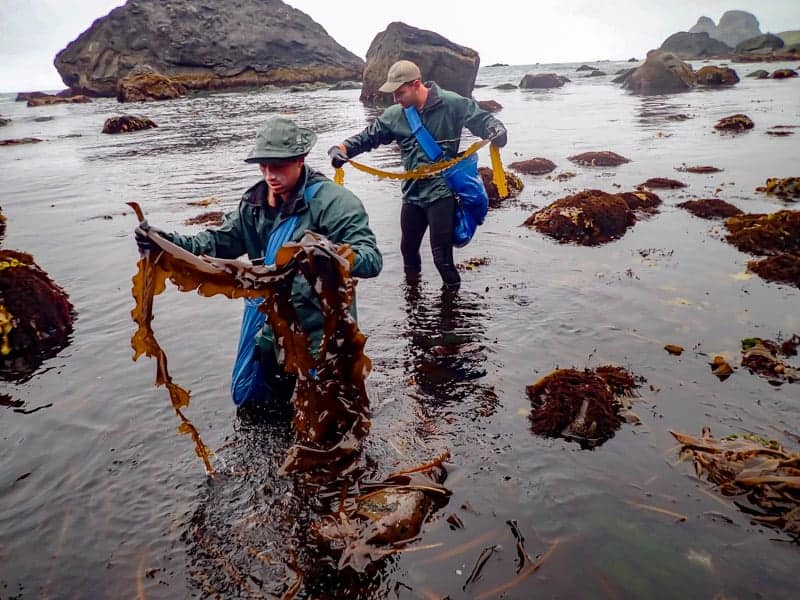
Our sea vegetables are completely natural wild foods, harvested from wild and rugged southern Oregon and northern California
coastlines. The ideal growing conditions here support some of the most luxuriously abundant seaweed beds found on the West Coast.
We are ecologically responsible harvesters; each plant is harvested by hand in a way that allows it to continue to grow and reproduce.
A maximum of 25% of any one species is harvested from an area per year. We return to the same beautiful rocky intertidal zone
locations year after year, and have yet to see any negative impact from our harvesting. After harvesting, we promptly air-dry our sea
vegetables at low temperatures, which preserves maximum flavor, nutrition and bio-activity. Dried sea vegetables will hold their
quality for a year or two if kept away from moisture and light.
Our sea vegetables are packaged in clear food grade polyethylene bags with colorful cardstock labels. All labels include general
cooking instructions and tasty recipes. Bulk sea vegetables are sold by the pound, but half-pound orders are also welcome.
2
Sea Vegetables
One Ounce
Packages Bulk
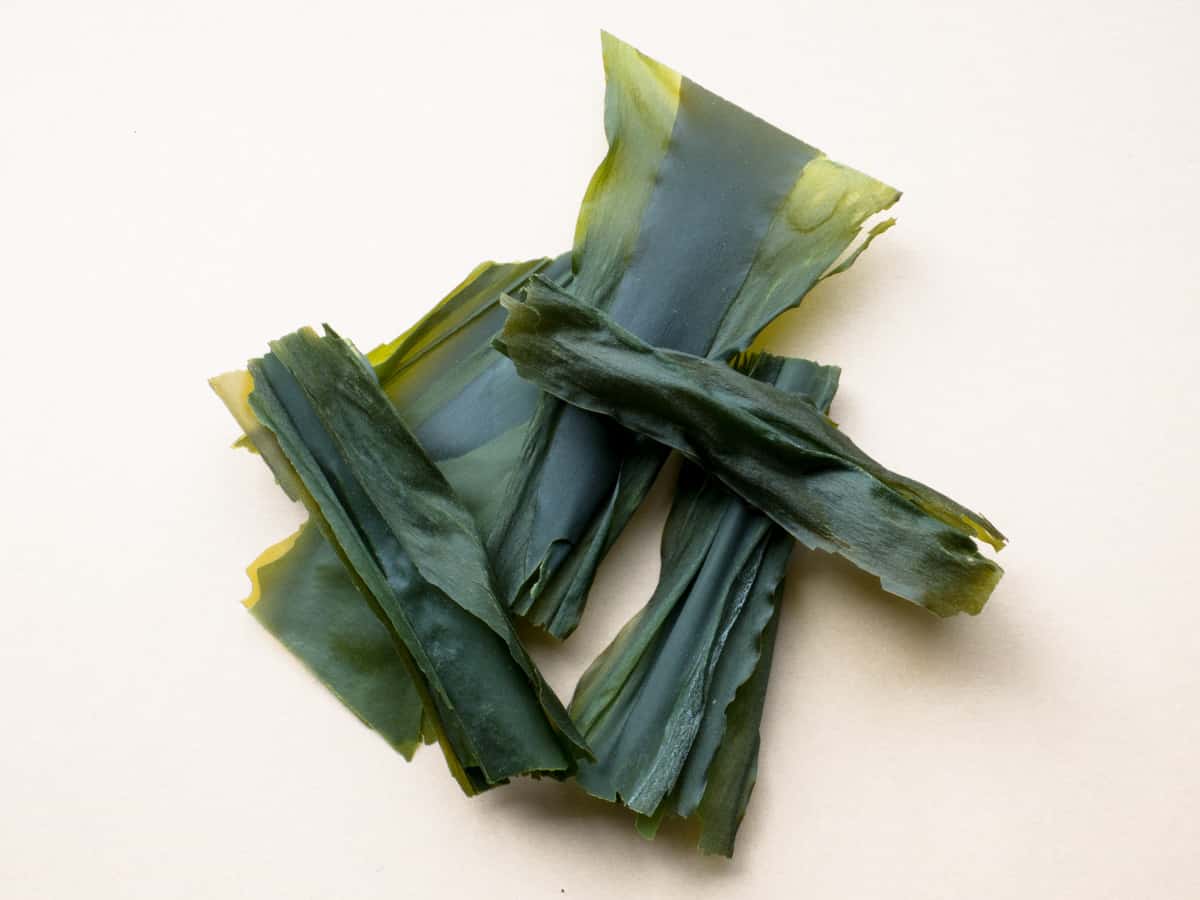
Kombu (Laminaria setchellii) $4.40 each $32.00/lb
Kombu probably has more iodine and therapeutic polysaccharides (algin, fucoidan and laminaran) than any other sea vegetable. It
adds lots of flavor and body when cooked in soups. When simmered with beans, the beans get tender faster. Kombu may also be
cooked with rice, or pre-cooked and marinated. It cooks tender in about one hour.
Wakame (Alaria marginata) 4.40 each 34.00/lb
Wakame is a great source of calcium, potassium and therapeutic polysaccharides. It has a very mild flavor, and is our favorite sea
vegetable for cooking with rice or steamed vegetables. Pre-cooked Wakame is also great in salads, marinades and pasta dishes. It
cooks tender in about 30 minutes.
Sea Vegetable Powder 4.40 each 34.00/lb
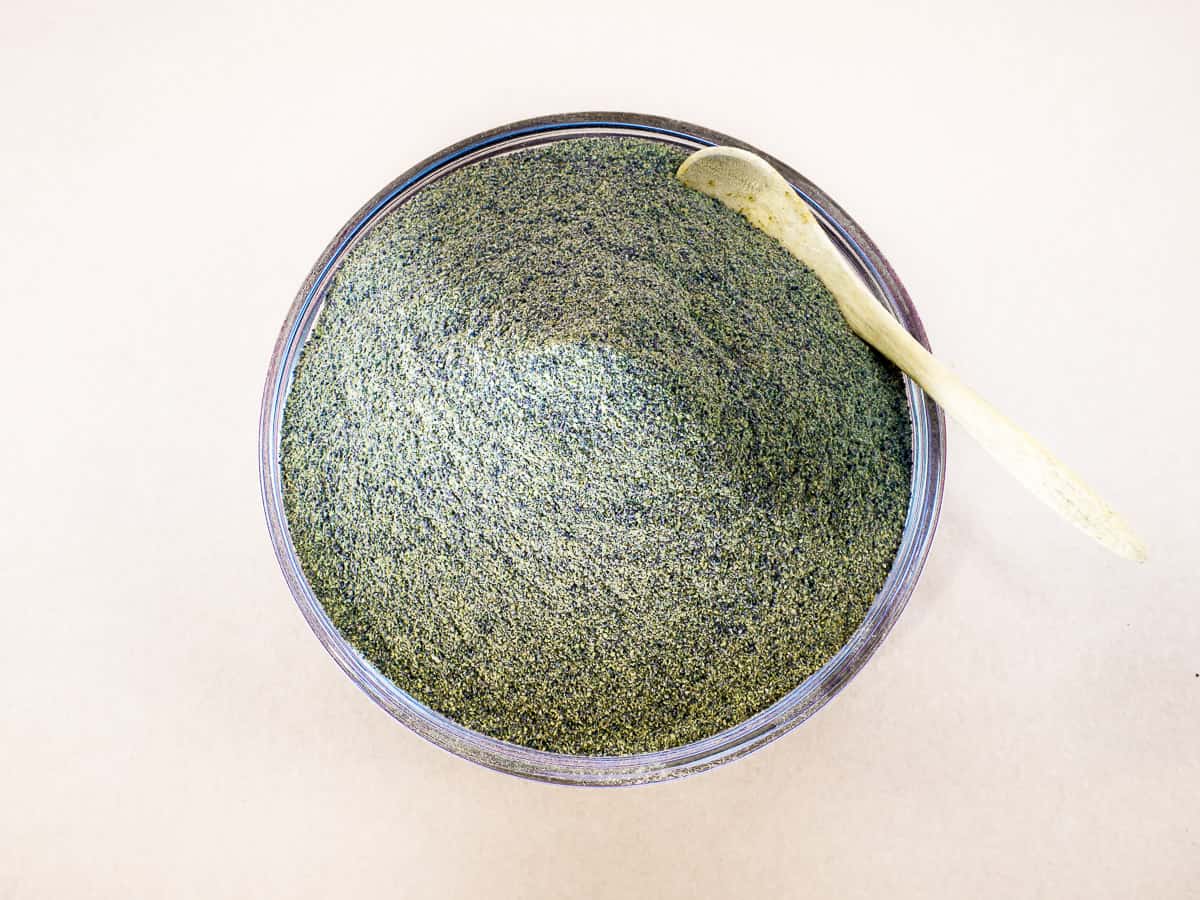
This is a mix of powdered Kombu and Wakame. Once you try this you’ll never go back to commercial kelp powders! Our Sea
Vegetable Powder has a clean, fresh taste. Ready to use as a flavorful, salty seasoning on salads, cooked vegetables, rice or popcorn,
as an ingredient in breads, or for thickening soups and sauces.
Nori (Porphyra spp.) 4.60 each 38.00/lb
Nori has a deep, rich seafood taste, and is a great source of protein, carotenes and vitamins. It makes a delicious snack as is or toasted
until crisp. Toasted and crumbled Nori is an excellent addition to breads, soups, and sauces, and makes a savory sprinkle on salads,
cooked vegetables, rice or popcorn. This is whole Nori, not sushi (sheet) Nori.
Kelp Fronds (Nereocystis luetkeana) 5.40 each 52.00/lb
Also known as Sea Whip or Bull Kelp, these delicate, salty fronds are so tender they melt in your mouth! Ready to eat as a snack or to
crumble and sprinkle on salads, vegetables, rice, popcorn etc. They contain about five times as much potassium salt as sodium salt, an
ideal balance of electrolytes. In fact, Kelp Fronds may be the world’s most concentrated natural source of potassium and other
minerals. We give them to our kids whenever they get high or low blood sugar; it’s amazing how fast it grounds their energy!
Sea Palm (Postelsia palmaeformis) 4.60 each 36.00/lb
These crispy fronds are ready to eat as a delicious, jerky-like snack. Kids love to nibble on Sea Palm, and it helps ground their energy
if their blood sugar gets too high or low. Cooked Sea Palm is remarkably noodle-like, and is excellent in pasta dishes, stir-fries, salads
and marinades. Sea Palm cooks tender in about 30 minutes.
Bladderwrack Tips (a.k.a. Fucus Tips) (Fucus vesiculosus) 4.60 each 38.00/lb
These are premium tender Bladderwrack Tips of sea vegetable quality. Bladderwrack has a long history of use in the treatment of
underactive thyroid (hypothyroid) conditions, with intolerance to cold, fatigue, depression, obesity, water retention, menstrual
problems, goiter etc. (Also see Bladderwrack Capsules on page 3.) It has a strong distinctive flavor, and can be cooked in soups, with
beans, or toasted and eaten as a crispy snack. Bladderwrack cooks tender in about one hour. Not recommended for pregnant women or
people with overactive thyroid (hyperthyroid) conditions.
Bladderwrack Powder (Fucus vesiculosus) (Bulk Only) 28.00/lb
This is the whole Bladderwrack plant, ground to a powder. Some people prefer to use this instead of Bladderwrack Tips or
Bladderwrack Capsules. Not recommended for pregnant women or people with overactive thyroid (hyperthyroid) conditions.
Gigartina Powder (Gigartina papillata) (Bulk Only) 48.00/lb
Gigartina is a red marine algae (seaweed) that is a natural source of carrageenan and other anti-viral and herpes-suppressing
compounds. Gigartina also has a tonic effect on the lungs and may be helpful for smoker’s hack, asthma, emphysema and other
chronic conditions. (Also see our Red Marine Algae capsules on page 3.)
Seaweed Skin Care
Seaweed Facial Mask/Body Wrap/ Bath Therapy $6.00 /2 oz pkg 28.00/lb
Seaweeds and clays have been used externally for skin care and health therapies since ancient times. This versatile product is a
powdered mix of Kombu, Gigartina and French Green Clay. Kombu and Gigartina are full of minerals and therapeutic gels
(polysaccharides) that nourish, soothe and moisturize your skin, while the clay deep-cleans, draws toxins and stimulates circulation.
For a facial mask or body wrap, mix with water to make a thin paste and apply. Or mix an ounce or two into your bath water for a
therapeutic bath! Contains only pure clay and seaweed; no additives or fragrances are added. Instructions included.
3
Sea Vegetable Capsules
Capsules are a convenient way to use sea vegetables as a daily dietary supplement. We are now offering three encapsulated products.
Recommended dosage for all three products is one or two capsules three times daily, with meals. All contain only 100% pure
powdered seaweeds in vegetarian capsules. No fillers, additives or preservatives are used.
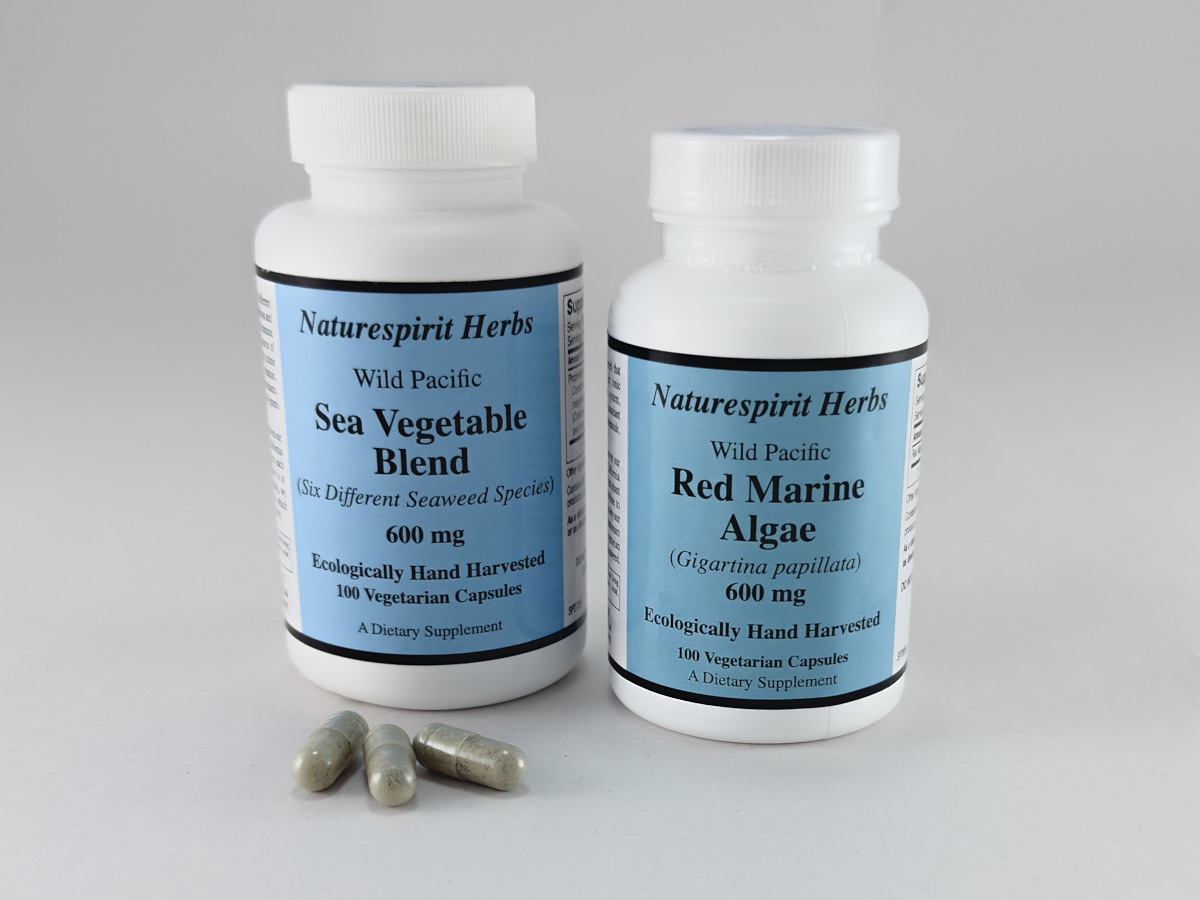
Sea Vegetable Blend (600 mg. capsules, 100 per bottle) $14.00 / bottle
These capsules contain five different Brown and Red marine algae (seaweed) species, blended together for a broad-spectrum
therapeutic nutritional supplement. Ingredients: Kombu (Laminaria setchellii), Wakame (Alaria marginata), Sea Fern (Cystoseira
osmundacea), Gigartina (Gigartina papillata) and Iridea (Iridea cordata).
Bladderwrack (a.k.a. Fucus) (600 mg. capsules, 100 per bottle) 14.00 / bottle
Bladderwrack has a long history of use in the treatment of underactive thyroid (hypothyroid) conditions, with intolerance to cold,
fatigue, depression, obesity, water retention, menstrual problems, goiter etc. For best results, use our herbal Thyroid Support formula
as well (see page 6). Avoiding chlorinated water, fluoridated toothpaste, aspirin, all soy products and cabbage family vegetables, and
taking L-tyrosine, taurine, copper, zinc and selenium supplements may also help (additional thyroid information can be found at our
website). We keep our Bladderwrack capsules in a freezer to preserve freshness and potency, and recommend that you keep unused
bottles frozen as well. If the recommended dosage causes gas or loose stools, start with less. Not recommended for pregnant women or
people with overactive thyroid (hyperthyroid) conditions. Ingredient: Bladderwrack (Fucus vesiculosus).
Red Marine Algae (600 mg. capsules, 100 per bottle) 18.00 / bottle
Gigartina is a red marine algae (seaweed) that is a natural source of carrageenan and other anti-viral and herpes-suppressing
compounds. Gigartina also has a tonic effect on the lungs and may be helpful for smoker’s hack, asthma, emphysema and other
chronic conditions. Ingredient: Gigartina (Gigartina papillata).
About our Herbal Extracts
Most of our herbal extracts are made with herbs that have
been ethically wildcrafted from healthy, unpolluted
environments or organically grown. A few high quality
imported herbs (organic, unsprayed, unsulphured, nonirradiated
etc.) are also used.
Our extracts are hand made in small quantities. We hand cut
our fresh herbs instead of blending them (blending ruptures
cell walls and can increase precipitation of active compounds).
We then macerate them in two parts of 95% grain alcohol.
Some of our fresh herb extracts are made with different herb
to alcohol ratios (1:1, 1:1.5 or 1:4). These are marked
accordingly.
Dried herbs are ground to a powder and percolated or
macerated in five parts of menstruum (grain alcohol and
water; different herbs require different alcohol percentages for
optimum extraction). A small percentage of vegetable
glycerine is used in some extracts and formulas to keep their
active compounds in solution.
Herbal Extract Price Codes
Price
Code 2 oz. 4 oz. 8 oz. 16 oz.
A $14.00 26.60 50.40 95.20
B 15.00 28.40 54.00 102.00
C 17.00 32.20 61.20 115.60
D 22.00 41.80 79.20 149.60
E 28.00 53.20 100.80 190.40
Herb Source and Use Codes
WC Wildcrafted
OG Organically Grown
US Unsprayed
◊ Not recommended for use during pregnancy
??e For external use only
⊕ For health care professionals only
Single Herb Extracts
(See herbal extract price code chart above)
HERBAL PRICE HERBAL PRICE
EXTRACT CODE EXTRACT CODE
Ambrosia (Ambrosia artemisiifolium) Fresh Herb WC B
Ambrosia (Ambrosia chamissonis) Fresh Herb WC B
Anemone ⊕ ◊ (Anemone occidentalis) Fresh Herb WC D
Angelica ◊ (Angelica arguta) Fresh Root WC B
Arnica ??e (Arnica cordifolia) Fr Whole Plant (1:1.5) WC C
Ashwagandha (Withania somnifera) Dried Root OG B
Aspen (Populus tremuloides) Dried Bark WC A
Astragalus (Astragalus membranaceus) Dried Root OG B
Balsam Poplar (Populus balsamifera) Dried Buds WC C
Balsamroot (Balsamorhiza deltoidea) Fresh Root WC B
4
Single Herb Extracts continued (see herbal extract price code chart on page 3)
HERBAL PRICE HERBAL PRICE
EXTRACT CODE EXTRACT CODE
Baneberry ◊ (Actea rubra) Fresh Root WC B
Bayberry (Myrica californica) Dried Root Bark WC B
Betony (Pedicularis densiflora) Fresh Herb (1:1) WC C
Bladderwrack ◊ (Fucus vesiculosus) Fr Whl Plt (1:1) WC B
Bittersweet ◊ (Solanum dulcamara) Fresh Stems WC C
Bleeding Heart ◊ (Dicentra formosa) Fr Whl Plant WC C
Blue Cohosh ◊ (Caulophyllum thalictroides) Dr Root WC A
Boneset (Eupatorium perfoliatum) Fresh Herb OG A
Buckbean (Menyanthes trifoliata) Fresh Herb WC D
Bugleweed (Lycopus virginicus) Fresh Herb OG A
Burdock (Arctium lappa) Fresh Root (1:1) OG A
Calamus ◊ (Acorus calamus) Fresh Root OG B
California Bay (Umbellularia californica) Fresh Leaf WC B
California Poppy ◊
(Eschscholzia californica) Fresh Whole Plant WC B
Catnip (Nepeta cataria) Fresh Herb (1:1.5) OG A
Cedar, Western Red ◊ (Thuja plicata) Fresh Leaf WC A
Cedar, White ◊ (Thuja occidentalis) Fresh Leaf WC A
Chapparal (Larrea tridentata) Dried Leaf WC A
Chaparro Amargosa (Castela emoryi) Dried Twigs WC D
Chaste Tree ◊ (Vitex agnus-castus) Dried Berries WC A
Cinnamon (Cinnamonum cassia) Dried Bark OG B
Cotton Root Bark ◊ (Gossypium herbaceum) Fresh Root Bark OG D
Cramp Bark (Viburnum opulus) Dried Bark WC A
Dandelion (Taraxacum officinale) Fresh Root (1:1) WC A
Devil’s Club ◊ (Oplopanax horridum) Dried Rt Bark WC C
Dogbane ⊕ ◊ (Apocynum androsaemifolium) Dried Root D
Dong Quai ◊ (Angelica sinensis) Dried Cured Root US B
Echinacea
(Echinacea purpurea) Fr Rt & Fl & Dried Seed OG B
Elecampane (Inula helenium) Fresh Root OG A
Eryngo (Eryngium yuccafolium) Fresh Herb (1:1) OG B
Fennel (Foeniculum vulgare) Dried Seed OG B
Feverfew (Chrysanthemum parthenium) Fresh Herb OG A
Figwort (Scrophularia californica) Dried Herb WC B
Gentian (Gentiana setigera) Fresh Whole Plant WC B
Ginger (Zingiber officinale) Fresh Root OG B
Ginkgo ◊ (Ginkgo biloba) Dried Leaf WC B
Ginseng, American Woodsgrown ◊
(Panax quinquefolium) Dried Root US E
Ginseng, Siberian ◊
(Eleutherococcus senticosus) Dried Root US A
Goldenseal ◊ (Hydrastis canadensis) Dried Root OG D
Gotu Kola (Centella asiatica) Fresh Herb (1:1.5) OG B
Guarana (Paullinia cupana) Dried Seed WC A
Hawthorn (Crataegus douglasii) Fr Flowering Tips WC C
Horehound (Marrubium vulgare) Fresh Herb (1:1.5) WC A
Horse Chesnut ◊ (Aesculus hippoocastanum) Dr Nut WC B
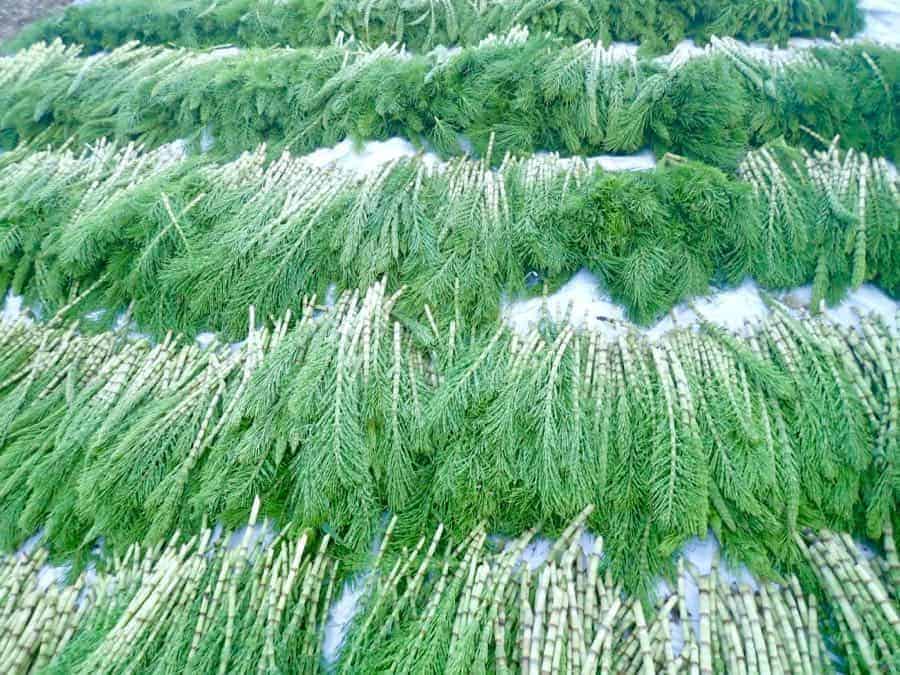
Horsetail (Equisetum telemateia) Fresh Herb (1:1) WC A
Iknish ◊ (Lomatium californicum) Fresh Root WC C
Inside-Out Flower ◊
(Vancouveria hexandra) Dried Whole Plant WC D
Kava (Piper methysticum) Dried Root US B
Licorice ◊ (Glycyrrhiza glabra) Fresh Root OG A
Lily-of–the-Valley ⊕ ◊
(Convallaria magalis) Fresh Whole Plant WC D
Lobelia ⊕ (Lobelia inflata) Fresh Herb (1:4) OG B
Lomatium ◊ (Lomatium dissectum) Fresh Root WC C
Lungwort Lichen (Lobaria pulmonaria) Dried Lichen WC B
Marshmallow (Althea officinalis) Fresh Root (1:1) OG A
Motherwort ◊ (Leonurus cardiaca) Fresh Herb OG A
Mugwort (Artemisia douglasiana) Fr. Herb (1:1.5) WC A
Myrrh ◊ (Commiphora myrrha) Dried Gum US B
Night Blooming Cereus
(Selenicereus grandiflorus) Fresh stems (1:1.5) OG C
Oat Seed (Avena sativa) Fresh Milky Seed OG A
Ocotillo ◊ (Fouqueria splendens) Fresh Bark (1:1.5) WC C
Oregon Grape (Mahonia nervosa) Fresh Root (1:1.5) WC B
Oregano Spirits ◊
(Origanum vulgare) Essential Oil (1:2) WC D
Osha, California – see Iknish
Osha, Mountain ◊ (Ligusticum grayi) Fresh Root WC C
Passionflower (Passiflora incarnata) Fresh Herb (1:1) OG A
Peppermint (Mentha piperita) Dried Leaf & Flower WC A
Periwinkle ◊ (Vinca major) Dried Herb WC B
Petasites ◊ (Petasites palmatus) Fresh Root WC B
Pipsissewa (Chimaphila umbellata) Fresh Herb WC B
Pleurisy Root ◊ (Asclepias tuberosa) Dried Root WC A
Poke Root ⊕ ◊ (Phytolacca americana) Fresh Root OG B
Prickly Ash (Xanthoxylum americanum) Dried Bark WC B
Pygeum (Pygeum africanum) Dried Bark WC A
Quassia (Picraena excelsa) Dried Wood WC A
Red Root (Ceanothus cuneatus) Fresh Root WC D
Rhubarb, Turkey ◊ (Rheum palmatum) Dried Root OG A
St. Johnswort
(Hypericum perforatum) Fresh Flowering Tips WC B
Saw Palmetto ◊ (Serenoa repens) Dried Berries OG B
Shepherd’s Purse ◊
(Capsella bursa-pastoris) Fresh Herb (1:1.5) WC A
Silk Tassel ◊ (Garrya fremontii) Dried Leaf WC C
Skullcap (Scutellaria lateriflora) Fresh Herb OG B
Spearmint (Mentha spicata) Dried Leaf & Flower OG A
Spikenard Berry (Aralia californica) Fr Berry (1:1) WC D
Spikenard Root (Aralia californica) Fr Root (1:1.5) WC B
Spilanthes (Spilanthes acmella) Fresh Flowerbuds OG C
Stone Root (Collinsonia canadensis) Fr Herb (1:1.5) OG B
Sweet Cicely (Osmorhiza occidentalis) Fresh Root WC C
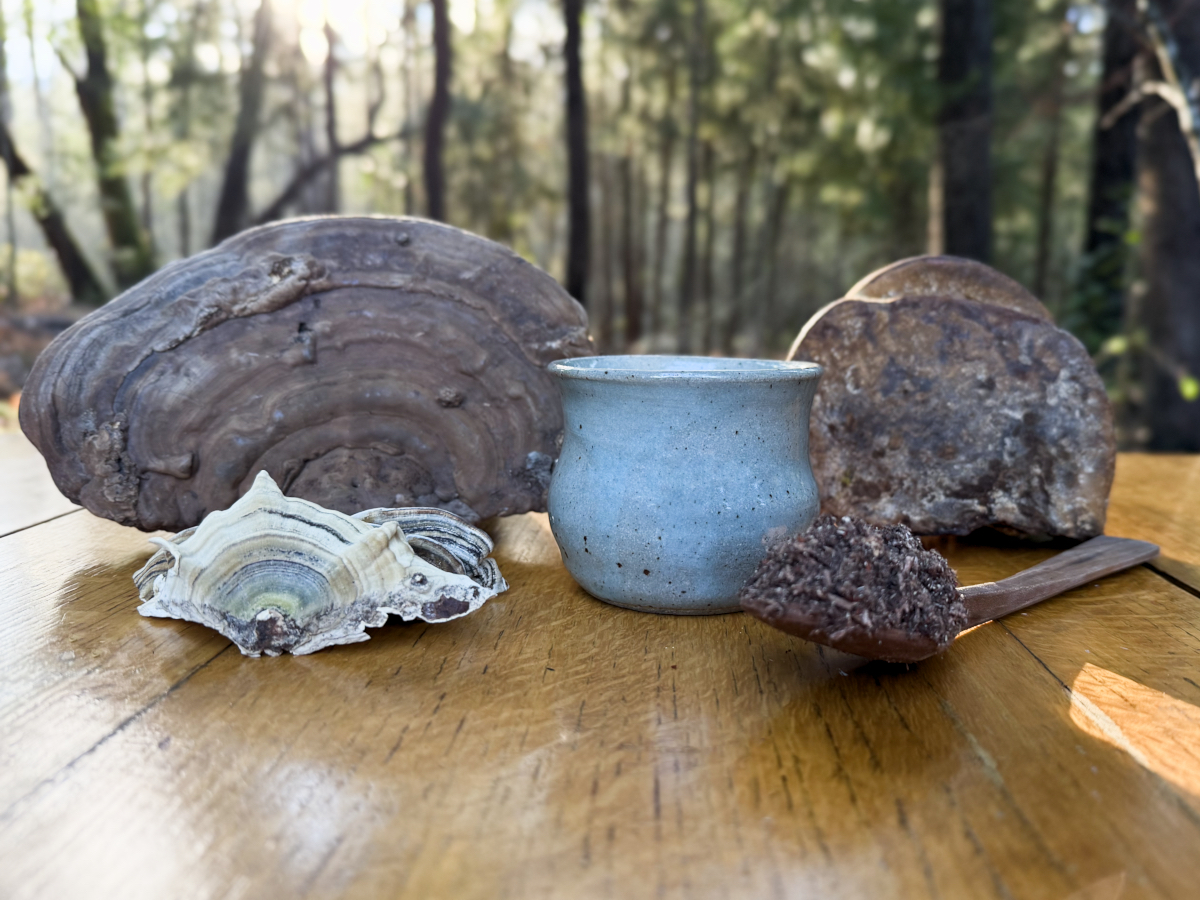
Turkey Tails (Trametes versicolor) Fresh Fungus WC D
Trillium (Trillium ovatum) Fresh Whole Plant WC D
Turmeric (Curcuma longa) Fresh Root OG B
Usnea ◊ (Usnea spp.) Dried Lichen WC B
Valerian, Sitka (Valeriana sitchensis) Fresh Root WC C
Vervain ◊ (Verbena lasiostachys) Dried Herb WC A
Western Peony (Paeonia brownii) Fr. Root (1:1.5) WC C
Wild Ginger ◊ (Asarum caudatum) Fresh Root WC C
Wild Indigo ⊕ ◊ (Baptisia tinctoria) Dried Root WC B
Wild Yam (Dioscorea villosa) Dried Root WC B
Witch Hazel (Hamamelis virginiana) Fr Leafy Twigs WC C
Yarrow (Achillea millefolium) Fresh Flower WC A
Yellow Pond Lily (Nuphar polysepalum) Fresh Root WC B
Yellow Dock (Rumex crispus) Dried Root WC A
Yerba Mansa (Anemopsis californica) Dried Root WC B
Yerba Santa (Eriodictyon californicum) Dried Leaf WC A
Yew ◊ (Taxus brevifolia) Fresh Leafy Twigs (1:1.5) WC C
5
Herbal Extract Formulas
All Herbal Extract Formulas are Price Code “C” (see price code chart on page 3)
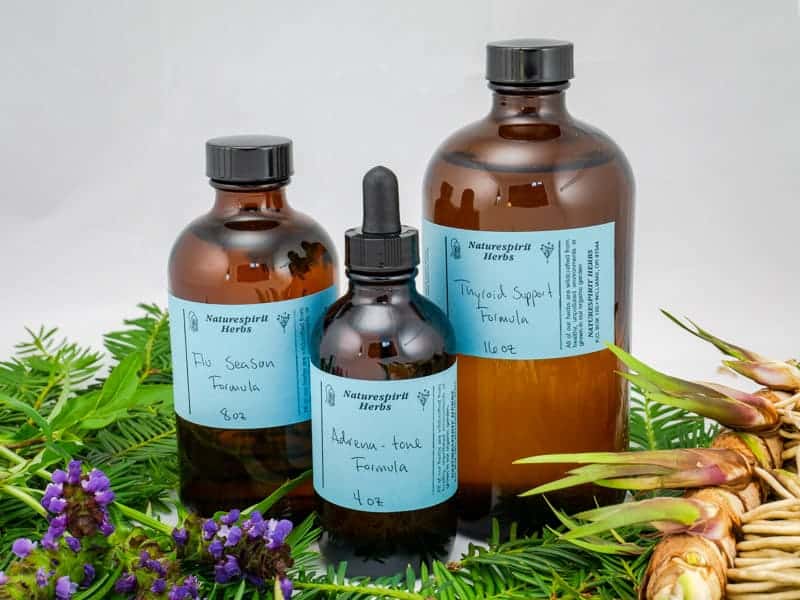
AdrenaTone ◊ Helps prevent or relieve anxiety and nervous exhaustion (burn-out) from prolonged stress or over-use of stimulants
(coffee, tobacco, etc). May also be used as an aid in quitting stimulants. Best with long term use. Ingredients: extracts of Licorice, Oat
Seed, Siberian Ginseng, Lobelia, Prickly Ash and Skullcap.
Brain Tonic ◊ These herbs have traditionally been used to stimulate circulation, increase oxygen supply to the brain and improve
mental clarity, especially for older folks with poor memory function, arteriosclerosis or general debility. Best with long term use and
daily aerobic exercise. Ingredients: extracts of Ginkgo, Gotu Kola, Calamus, American Ginseng, Aristolochia, Prickly Ash, Night-
Blooming Cereus, Bayberry, Cayenne and Oregano.
CandAid ◊ Used internally or as a mouthwash or douche (diluted with nine parts of water and one part of yogurt) for candida, yeast
infections and thrush, or to help re-establish healthy flora after using antibiotics. (Also see Oil of Oregano on page 6) For best results
use long term, avoid all sweets and eat lots of yogurt, more protein and less carbohydrates. Ingredients: extracts of Pao D’arco,
Spilanthes, Usnea, Oregon Grape, Sweet Cicely, Yerba Mansa, Chapparo Amargosa, Quassia and Myrrh.
Cheer Up! ◊ Composed of mood-enhancing, anti-depressant, anti-anxiety and adaptogenic herbs. Best with long term use and daily
aerobic exercise. (Also see Adrena-Tone and Bladderwrack Capsules) Ingredients: extracts of St. Johnswort, Anemone, Kava,
Rhodiola, Siberian Ginseng, Aralia Berry, Ashwagandha, Ginger, Calamus, California Poppy and Bladderwrack.
Colon Tonic ◊ Based on an old herbal formula for stimulating peristalsis and relieving chronic constipation. Best with daily aerobic
exercise and increased intake of water and dietary fiber (vegetables, whole grains, Psyllium etc.) Ingredients: extracts of Cascara
Sagrada, Licorice, Oregon Grape, Cayenne, Bayberry, Prickly Ash, Ginger, Turkey Rhubarb and Lobelia.
Cramp Calm ◊ A blend of antispasmodic herbs used to relieve painful menstrual, stomach, intestinal, gall bladder or urinary tract
cramps. Ingredients: extracts of Wild Yam, Cramp Bark, Silk Tassel, California Poppy, Western Peony and Baneberry.
Digestive Bitters – Bitters have been taken before meals since ancient times for chronic digestive deficiency problems: anorexia, poor
appetite, deficient mouth and stomach secretions, poor absorption, gas, irritable bowel, etc. Not for acute, inflamed conditions. Best
with long term use. Ingredients: extracts of Gentian, Quassia, Cardamom, Orange Peel, Angelica, Calamus and Bayberry.
Female Tonic (Long Cycle) ◊ A hormonal tonic/PMS formula for women with long or irregular menstrual cycles, estrogendominance
PMS distress (water retention, headaches, emotional etc) and crampy, slow-onset menses. May also be beneficial for
chronically congested or inflamed uterine, cervical or vaginal conditions. Best with long term use. (Also see Bladderwrack Capsules
and Liver Deficiency Tonic) Ingredients: extracts of Dong Quai, Chaste Tree, Blue Cohosh, Cotton Root, American Ginseng, Red
Root, Anemone, Baneberry, Prickly Ash and Oregon Grape.
Female Tonic (Short Cycle) ◊ A hormonal tonic/PMS formula for women with short, progesterone-dominant menstrual cycles and
anabolic distress that starts a week or so before menses, including late-night energy, sweating, irritability, protein/fat cravings and
acne. Best with long term use. (Also see Liver Excess Tonic) Ingredients: extracts of Chaste Tree, Motherwort, Dandelion, Oregon
Grape, Milk Thistle, Baneberry, Yellow Pond Lily, Red Root, Siberian Ginseng and Western Peony.
Flu Season ◊ (Formerly called Lomatium-Osha Compound) Made with herbs known for their antiviral, expectorant and diaphoretic
qualities, and used to prevent or treat colds, influenza and other acute viral infections. Best used together with Immune Response at
the first onset of symptoms, continuing with the Flu Season for up to a month afterwards to prevent recurrence. Ingredients: extracts of
Lomatium, Osha, Iknish, Spikenard, Ginger, Garlic, Oregano, Red Root, Oregon Grape, Red Cedar, Cayenne and Yerba Mansa.
Heart Calm – For nervous heart conditions such as tachycardia, palpitations and arrhythmias, often accompanied by a sensation of
tightness in the chest or shortness of breath. Best with long term use. (Also see Adrena-tone and Thyroid Calm) Ingredients: extracts
of Hawthorn, Passionflower, Night-Blooming Cereus, Lily-of-the-Valley, Bugleweed and Motherwort.
Herbal Cough Syrup – This tasty syrup is locally famous. Made with expectorant, demulcent and antispasmodic herbs, it helps
loosen phlegm and promotes easier breathing. Concentrated. Ingredients: Honey, glycerine, and extracts of Spikenard, Balsamroot,
Iknish, Balsam Poplar, Osha, Yerba Mansa, Elecampane, Lungwort Lichen, Lobelia, Petasites, Yerba Santa and Wild Cherry.
HypertensEase ◊ This formula is a tonic for people with mild to moderate high blood pressure (essential hypertension) and high
cholesterol. It is composed of cardio-tonic, diuretic, vasodilating, blood thinning, cholesterol reducing and adaptogenic herbs. Best
with long term use. (Also see Liver Excess Tonic) A full regimen would include regular consumption of Sea Vegetables, Garlic
capsules and Nettle tea, reducing dietary fats and proteins, eating more vegetables, and drinking more water. Ingredients: extracts of
Hawthorn, Passionflower, Siberian Ginseng, Kelp Fronds, Dandelion, Red Root, Prickly Ash, Aristolochia, Cayenne and Puncture
Vine.
6
All Herbal Extract Formulas are Price Code “C” (see price code chart on page 3)
HypotensEase ◊ This formula is a tonic for people with mild to moderately low blood pressure (hypotension). May also be helpful for
any accompanying weak heart function, water retention or edema. Best with long term use. Ingredients: extracts of Night-Blooming
Cereus, Kola Nut, Licorice, Lily-of-the-Valley, Gotu Kola, Dogbane, Korean Red Ginseng, and Dong Quai.
Immune Response ◊ These herbs are known to increase resistance to infection when used at the first onset of acute disease. (Also see
Flu Season and Lymph–Immune Tonic) Ingredients: extracts of Echinacea, Red Root, Myrrh, Arnica, Ocotillo, Red Cedar,
Aristolochia, Cayenne and Stillingia.
JointEase – Used internally for rheumatoid- and osteo- arthritis. Best with long term use. (Also see Pain Formula and Herbal
Liniment) Ingredients: extracts of Yerba Mansa, Figwort, Aspen, Prickly Ash, Feverfew, Horsetail, Devil’s Club, Yucca and Oregano.
Kids Combo – A combination of gentle, time-tested herbs for babies and small children, used for fevers, coughs, belly-aches, gas,
colic, constipation, agitation and sleeplessness. Ingredients: extracts of Catnip, Fennel, Chamomile, Peppermint and Licorice.
Liver Deficiency Tonic – A constitutional tonic for people with chronically deficient liver function, with dry skin, allergies, blood
sugar problems, difficult digestion of fats and proteins, and a tendency toward adrenaline stress and constipation. Best with long term
use and increased dietary proteins and fats. Ingredients: extracts of Oregon Grape, Yellow Dock, Milk Thistle, Prickly Ash, Red Root,
Blue Flag, Buckbean, Aristolochia, Ocotillo and Devils Club.
Liver Excess Tonic – A constitutional tonic for people with chronically excessive liver function (liver heat) and general anabolic
excess, with oily skin, cravings for fats and proteins, and a tendency toward elevated cholesterols, high blood pressure (see
HypertensEase) and hyperuricemia. Best with long term use. A full regimen would include regular consumption of Sea Vegetables
and Nettle tea, reducing dietary fats and proteins, eating more vegetables, and drinking more water. Ingredients: extracts of Dandelion,
Burdock, Milk Thistle, Puncture Vine, Vervain, Chaparral, Mugwort, Kelp Fronds and Siberian Ginseng.
Lymph-Immune Tonic ◊ For chronic immune suppression (seem to be sick all the time, with colds, influenza, sinus infections,
tonsillitis, mononucleosis, EBV, CMV, HIV, candida, mycosis, etc.) This may be caused by underactive thyroid conditions (see
Bladderwrack capsules and Thyroid Support Formula), chronic depression, chemotherapy or anti-inflammatory drugs. Best with long
term use. Not for acute conditions (see Immune Response). Ingredients: extracts of Echinacea, Red Root, Astragalus, Baptisia, Red
Cedar, Ocotillo, Stillingia, Myrrh, Devil’s Club, Aristolochia, Blue Flag and Lomatium.
MenoPeace ◊ These herbs have a long history of use in relieving the discomforts of menopause: hot flashes, sweating, anxiety, heart
palpitations, insomnia, etc. Ingredients: extracts of Dong Quai, Motherwort, Bugleweed, Licorice, Anemone, Baneberry, Blue
Cohosh, Devil’s Club and Night-Blooming Cereus.
Mouth and Gum Tonic – A stimulating antiseptic mouthwash for the prevention and relief of mouth sores, inflamed or bleeding
gums and pyorrhea. Best if used with a pinch of salt and baking soda. Also useful as a gargle for sore or strep throat. Ingredients:
extracts of Yerba Mansa, Bayberry, Myrrh, Licorice, Spilanthes, Bistort, Cinnamon, Peppermint and Cloves.
Muscle Calm – This formula is used internally for painful skeletal muscle spasms from overworked or strained muscles, including
neck pain, back pain, “Charlie horse” leg cramps, etc. as well as tics, twitches and Restless Legs syndrome. (Also see Herbal
Liniment, Pain Formula and Kelp Fronds) Ingredients: extracts of Betony, Scullcap, Western Peony, St. Johnswort, Baneberry,
Bleeding Heart, Kelp Fronds and California Poppy.
Neutralizing Cordial ◊ Modified from an old-time soothing digestive tonic/antacid formula, and used for acute digestive distress,
such as gastroenteritis (stomach flu), nausea, upset stomach, heartburn, stomach and ulcer pain, gas pains and diarrhea. Ingredients:
honey, glycerine, potassium carbonate and extracts of Turkey Rhubarb, Cinnamon, Goldenseal and Peppermint.
Pain Formula ◊ An herbal analgesic, for relieving pain from injuries, headaches, toothaches, arthritis, neuralgia, sciatica etc. Used
internally and topically. Ingredients: extracts of California Poppy, Skullcap, Bleeding Heart, Aspen, St. Johnswort, Kava, Petasites,
Motherwort and Baneberry.
Pollen Season – Formulated for the prevention and relief of hay fever and sinus allergies (best with long term use). It may also be
used as a simple decongestant for head colds, wet asthma or other wheezy/watery/drippy lung or nose conditions. Ingredients: extracts
of Yerba Santa, Yerba Mansa, Ambrosia, Bayberry, Feverfew, Horehound, Mormon Tea, Inside-Out Flower and Oregon Grape.
ProsTone – Used to maintain prostate health, relieve acute or chronic prostate conditions and soothe related urinary tract symptoms.
Best with long term use. (Also see Venous Tonic) Ingredients: extracts of Saw Palmetto, Red Cedar, Yerba Mansa, Ocotillo, Dong
Quai, Cotton Root Bark, Eryngo, Pygeum and Baneberry.
Relaxation – A combination of sedative herbs to promote relaxation and a good night’s sleep. (Also see AdrenaTone) An excellent
antidote to caffeine jitters. Ingredients: extracts of Valerian, Skullcap, Passionflower, Kava and California Poppy.
7
All Herbal Extract Formulas are Price Code “C” (see price code chart on page 3)
Repair Energy – Used internally to prevent inflammation and speed the regeneration of injured tissues after any kind of injury or
surgery. (Also see Pain Formula and Herbal Liniment) May also be useful for healing chronic tendonitis. Ingredients: extracts of
Yerba Mansa, Gotu Kola, Bladderwrack, Echinacea, Licorice, Siberian Ginseng, Chapparal, Milk Thistle, Oregon Grape and Figwort.
Skin Tonic – To improve skin tone and relieve chronic eczema, psoriasis, acne etc. Best with long term use and regular consumption
of sea vegetables (also check for food allergies). Ingredients: extracts of Yellow Dock, Figwort, Bladderwrack, Oregon Grape, Gotu
Kola, Bittersweet, Pipsissewa and Devil’s Club.
Thyroid Calm – These are herbs for overactive thyroid (hyperthyroid) conditions, with nervousness, insomnia, rapid heartbeat, heart
palpitations, weight loss etc. Best with long term use. Not recommended for people with underactive thyroid conditions. Ingredients:
extracts of Bugleweed, Motherwort, Lemon Balm, Passionflower, Night-Blooming Cereus, Vervain and Siberian Ginseng.
Thyroid Support ◊ Formulated to enhance the effectiveness of our Bladderwrack capsules (see page 3) in treating underactive
thyroid (hypothyroid) conditions, with intolerance to cold, fatigue, depression, obesity, water retention, menstrual problems etc. Best
with long term use. Not recommended for people with overactive thyroid (hyperthyroid) conditions. Ingredients: extracts of Gotu
Kola, Bladderwrack, Anemone, Oregon Grape, Blue Flag, Ashwagandha, Prickly Ash, Aristolochia, Guggulu, Black Pepper and
Devil’s Club.
Traveler’s Insurance ◊ For preventing traveler’s diarrhea, amoebic dysentery, giardia, shigellosis, protozoa, parasites and other
horrors. Ingredients: extracts of Chaparro Amargosa, Quassia, Turkey Rhubarb, Oregano, Astragalus, Usnea, Garlic and Myrrh.
Traveler’s Salvation ◊ For treating traveler’s diarrhea, amoebic dysentery, giardia, shigellosis, protozoa, parasites etc. and the
associated pain and cramping. (Also see Oil of Oregano) Ingredients: extracts of Chaparro Amargosa, Quassia, Turkey Rhubarb,
Bistort, Ginger, Silk Tassel, Yerba Mansa, Bayberry, Yarrow, Echinacea and Baptisia.
Urinary Tract Tonic – This formula is used to prevent or treat infections and chronic irritation of the urinary tract (bladder, kidneys
etc.) Ingredients: extracts of Corn Silk, Pipsissewa, Horsetail, Usnea, Yerba Mansa, Eryngo, Echinacea and Astragalus.
Venous Tonic ◊ Used to relieve varicose veins, hemorrhoids, and other aching or congested conditions of the uterus, cervix, prostate,
rectum or legs. Best with long term use. (Also see Liver Deficiency Tonic) Ingredients: extracts of Stone Root, Witch Hazel, Horse
Chestnut, Baneberry, Prickly Ash, Ocotillo, Red Root and Gotu Kola.
Wake Up! – Made with nature’s three finest caffeine herbs; causes less restlessness than coffee. We keep a bottle handy for when we
are tired but need to keep going. Extremely convenient. Ingredients: extracts of Guarana, Mate and Green Tea.
Herbal Liniment, Oils and Salve
(Our price code chart is on page 3)
Herbal Liniment (Price Code “C”) Applied topically to bruises, sprains, aching muscles and arthritic joints to relieve pain, swelling
and inflammation. (Also see Pain Formula, Repair Energy and JointEase) Contains Cayenne; for external use on unbroken skin only!
Use with care and wash hands carefully after applying. Ingredients: extracts of Arnica, Baneberry, Cayenne, Hyssop, Tobacco,
Datura, Yerba Mansa, Bleeding Heart, Yarrow and Wintergreen.
Oil of Oregano (Price Code “D”) ◊ This is the highest quality (minimum 80% carvacrol) essential oil of Turkish Wild Oregano
(Origanum vulgare) blended with two parts by volume of extra-virgin olive oil to slow absorption and to tone down its Cayenne-like
heat (use with care!). Oil of Oregano has potent antiviral, anti-bacterial, anti-fungal and anti-Candida qualities, and is a strong
expectorant, anti-oxidant and circulatory stimulant. It may be used topically or internally for a wide range of conditions.
St. Johnswort Oil (Price Code “C”) An infused oil that is used topically for muscle pain, nerve pain, neuralgia, sciatica, burns and
abrasions. Ingredients: Fresh St. Johnswort flowers, extra-virgin olive oil and vitamin E.
Arnica Oil (Price Code “C) This infused oil is used topically to increase circulation, relieve inflammation and speed the healing of
bruises, sprains, arthritis and bursitis. For external use on unbroken skin only. Ingredients: Arnica, extra-virgin olive oil and vitamin E.
Balsam Poplar/Fir Antiseptic Salve (1 oz. jar/$9.00) This fragrant salve may be applied to burns and abrasions to keep the surface
antiseptic and promote circulation for healing. Ingredients: Balsam Poplar Bud and Grand Fir resins in a clarified butter and beeswax
base. Keeps for years.
You have the freedom as well as the responsibility to decide what to put into your own body.
The medical information in this catalog is for educational purposes only.
It is not intended to replace your own good judgment or the advice of a qualified health care professional.

Naturespirit Herbs™
Wildcrafted Sea Vegetables, Herbs and Herbal Products Since 1990
James Jungwirth & Kari Rein • P.O. Box 150 • Williams OR 97544
www.naturespiritherbs.com
2006 Wildcrafted Herbs List
Our Sea Vegetable and Herbal Products catalog is available upon request
Please order by phone (541) 846-7995
Business hours are Monday through Friday
8:00 am to 5:00 pm Pacific Time
We have been harvesting medicinal wild plants for over 25 years; we understand and care about the plants we work with. Each herb is
harvested during its prime stage of development, in a way that causes minimal impact on future plant populations. We prefer to charge
a higher price for our herbs and take the time to do the job right.
We go out to harvest herbs when people order them. We do not keep herbs in stock. This assures you of fresh herbs and prevents
waste. Herbs are only available in season, so order before the season starts. We will ship your herbs when they are ready, by Parcel
Post, Priority Mail, UPS or FedEx. We charge you the actual shipping cost, with an $8.00 minimum.
All orders must be prepaid (by check or money order) unless other arrangements have been made. There is a 2% monthly late charge
on overdue accounts and a $20.00 fee for bounced checks. Prices and availability are subject to change without notice. We do not
accept returns of wildcrafted herbs unless we have made a mistake. Please check with us before returning anything.
COMMON/LATIN NAME PART SEASON PRICE PER POUND
1-4 lbs 5-25 25-100 1-4 lbs 5-25 25-100
Fresh Fresh Fresh Dried Dried Dried
Alder (Alnus rubra) Bark Mar-Nov –––– –––– –––– 16.00 12.00 10.00
Alder (Alnus rubra) Catkins Feb-Mar 28.00 23.00 21.00 –––– –––– ––––
Ambrosia (Ambrosia chamissonis) Herb Jun-Jul 20.00 16.00 14.00 44.00 38.00 ––––
Anemone (Anemone occidentalis) Herb Jul-Aug 40.00 34.00 30.00 –––– –––– ––––
Angelica, Mountain (Angelica arguta) Root Aug-Oct 28.00 23.00 21.00 –––– –––– ––––
Arnica (Arnica cordifolia) Whole Plant Jun-Jul 24.00 19.00 17.00 56.00 48.00 44.00
Aspen (Populus tremuloides) Bark Apr-Sep –––– –––– –––– 20.00 16.00 14.00
Balsam Poplar (Populus balsamifera) Bark Mar-Nov –––– –––– –––– 18.00 14.00 12.00
Balsamroot (Balsamorhiza saggitata) Root Aug-Mar 18.00 14.00 12.00 –––– –––– ––––
Balsamroot (Balsamorhiza saggitata) Leaf May-June 12.00 9.00 7.00 28.00 23.00 21.00
Baneberry (Actea rubra) Root Aug-Sep 28.00 23.00 21.00 –––– –––– ––––
Bayberry (Myrica californica) Root Aug-Nov 24.00 19.00 17.00 –––– –––– ––––
Betony (Lousewort) (Pedicularis densiflora) Herb April 18.00 14.00 12.00 48.00 42.00 38.00
Bittersweet (Solanum dulcamara) Twigs Oct-Nov 28.00 23.00 21.00 –––– –––– ––––
Black Walnut (Juglans nigra) Nuts Oct-Nov 10.00 7.00 5.00 –––– –––– ––––
Bleeding Heart (Dicentra formosa) Root Aug-Sep 36.00 31.00 28.00 –––– –––– ––––
Buckwheat Bush (Eriogonum spp.) Herb Jul-Aug 24.00 19.00 17.00 48.00 42.00 ––––
Butterbur (Petasites palmatus) Root Aug-Feb 18.00 14.00 12.00 40.00 34.00 30.00
Butterbur (Petasites palmatus) Herb Jul-Aug 16.00 12.00 10.00 48.00 42.00 38.00
Calamus (Acorus calamus) (Org. Grown) Root Oct-Mar 16.00 12.00 10.00 36.00 31.00 28.00
California Bay (Umbellularia californica) Leafy Twigs Jul-Sep 16.00 12.00 10.00 40.00 34.00 30.00
California Poppy (Eschscholzia californica) Whole Plant May-Jun 18.00 14.00 12.00 –––– –––– ––––
Cedar, Western Red (Thuja plicata) Leafy Tips Jun-Nov 12.00 9.00 7.00 24.00 20.00 18.00
Cedar, White (Thuja occidentalis) Leafy Tips Mar-Oct 12.00 9.00 7.00 24.00 20.00 18.00
Chickweed (Stellaria media) Herb April 16.00 12.00 10.00 –––– –––– ––––
Cleavers (Galium aparine) Herb May 18.00 14.00 12.00 44.00 38.00 34.00
Corn Lily (Veratrum californicum) Root Aug+Sep+May 14.00 11.00 9.00 40.00 34.00 30.00
Cow Parsnip (Heracleum lanatum) Root Aug-Sep 28.00 23.00 21.00 –––– –––– ––––
COMMON/LATIN NAME PART SEASON PRICE PER POUND
1-4 lbs 5-25 25-100 1-4 lbs 5-25 25-100
Fresh Fresh Fresh Dried Dried Dried
Dandelion (Taraxacum officinale) Whole Plant April 14.00 11.00 9.00 –––– –––– ––––
Dandelion (Taraxacum officinale) Root Aug-Sep 20.00 16.00 14.00 –––– –––– ––––
Dogbane (Apocynum cannabinum) Root Aug-Sep 32.00 27.00 24.00 72.00 64.00 60.00
Elder, Pacific (Sambucus caerulea) Berry Sep-Oct –––– 9.00 7.00 28.00 24.00 22.00
Elder, Pacific (Sambucus caerulea) Flowers Jun-Jul 24.00 19.00 17.00 56.00 48.00 44.00
False Hellebore – See Corn Lily –––– –––– –––– –––– –––– ––––
False Solomon’s Seal (Smilacina racemosa) Root Sep-Oct 32.00 27.00 24.00 –––– –––– ––––
Figwort (Scrophularia californica) Herb May-Jun 18.00 14.00 12.00 –––– –––– ––––
Fireweed (Epilobium angustifolia) Herb Jun-Jul 16.00 12.00 10.00 28.00 24.00 22.00
Hawthorn (Crataegus douglasii) Flowering Tips April 24.00 20.00 18.00 56.00 48.00 ––––
Hawthorn (Crataegus monogyna) Flowering Tips April 20.00 16.00 14.00 48.00 42.00 38.00
Hawthorn (Crataegus monogyna) Fruit Sep-Oct 12.00 9.00 7.00 28.00 24.00 22.00
Hedge Nettle (Stachys rigida) Herb Jul-Aug 18.00 14.00 12.00 48.00 42.00 38.00
Horsetail (Equisetum telmateia) Herb Apr-Aug 10.00 7.00 5.00 32.00 27.00 24.00
Huckleberry (Vaccinium ovatum) Leafy Tips July-Sep 20.00 16.00 14.00 44.00 38.00 34.00
Iknish (Lomatium californicum) Root Nov-Feb 32.00 27.00 24.00 –––– –––– ––––
Inside-Out Flower (Vancouveria spp.) Whole Plant July-Sep 36.00 31.00 28.00 –––– –––– ––––
Juniper (Juniperus spp.) Berry Oct-Feb –––– –––– –––– –––– 14.00 12.00
Licorice Fern (Polypodium glycyrrhiza) Root Aug-Feb 36.00 31.00 28.00 –––– –––– ––––
Lomatium (Lomatium dissectum) Root Aug-Feb 24.00 19.00 17.00 –––– –––– ––––
Lungwort Lichen (Lobaria pulmonaria) Lichen Mar-May 28.00 23.00 21.00 40.00 34.00 30.00
Madrone (Arbutus menziesii) Leafy Tips Aug-Nov 10.00 7.00 5.00 24.00 19.00 17.00
Mugwort (Artemisia douglasiana) Herb Jul-Aug 12.00 9.00 7.00 24.00 19.00 17.00
Nettles (Urtica dioica) Herb Jun-Jul 14.00 11.00 9.00 36.00 31.00 28.00
Nettles (Urtica dioica) Root Oct-Nov 20.00 16.00 14.00 44.00 38.00 34.00
Nettles (Urtica dioica) Seed Aug-Sep 28.00 23.00 21.00 64.00 56.00 52.00
Oregon Grape (Mahonia nervosa) Root Jul-Dec 16.00 12.00 10.00 36.00 31.00 28.00
Osha, California – see Iknish –––– –––– –––– –––– –––– ––––
Osha, Mountain (Ligusticum grayi) Root Aug-Oct 36.00 31.00 28.00 –––– –––– ––––
Pearly Everlasting (Anaphalis margaritacea) Herb Jul-Aug 16.00 12.00 10.00 40.00 34.00 30.00
Peppermint (Mentha piperita) Herb Aug-Sep 12.00 9.00 7.00 32.00 27.00 24.00
Periwinkle (Vinca major) Herb May-Aug 16.00 12.00 10.00 40.00 34.00 30.00
Pipsissewa (Chimaphila umbellata) Herb Apr-Oct 20.00 16.00 14.00 44.00 38.00 34.00
Plantain, Lance Leaf (Plantago lanceolata) Herb May 18.00 14.00 12.00 –––– –––– ––––
Red Root (Ceanothus cuneatus) Root Sep-Feb 24.00 19.00 17.00 56.00 48.00 44.00
Red Root (Ceanothus velutinus) Root Sep-Oct 24.00 19.00 17.00 56.00 48.00 44.00
Scotch Broom (Cytisus scoparius) Flowering Tips Apr-May 12.00 9.00 7.00 32.00 27.00 24.00
Self Heal (Prunella vulgaris) Herb May-Aug 18.00 14.00 12.00 48.00 42.00 38.00
Silk Tassel (Garrya fremontii) Leafy Tips Aug-Oct 14.00 11.00 9.00 32.00 27.00 24.00
Soaproot (Chlorogalum pomeridianum) Root Aug-Nov 22.00 18.00 16.00 –––– –––– ––––
Spikenard (Aralia californica) Root Oct-Apr 20.00 16.00 14.00 –––– –––– ––––
Spikenard (Aralia californica) Berry Aug-Sep 48.00 42.00 –––– –––– –––– ––––
St. Johnswort (Hypericum perforatum) Flowering Tips Jun-Jul 14.00 11.00 9.00 –––– –––– ––––
Sweet Cicely (Osmorrhiza occidentalis) Root Aug-Nov 28.00 23.00 21.00 64.00 56.00 52.00
Sweet Clover (Melilotus albus) Flowering Tips June 14.00 11.00 9.00 –––– –––– ––––
Trillium (Trillium ovatum) Whole Plant April 48.00 –––– –––– –––– –––– ––––
Turkey Tails (Trametes versicolor) Fungus Mar-May 32.00 27.00 24.00 64.00 56.00 52.00
Usnea (Usnea spp.) Lichen Feb-May –––– –––– –––– 32.00 27.00 24.00
Valerian, Sitka (Valeriana sitchensis) Root Aug-Oct 36.00 31.00 28.00 –––– –––– ––––
Vanilla Leaf (Achlys triphylla) Leaf Jul-Sep 24.00 19.00 17.00 72.00 64.00 60.00
Vervain, Western (Verbena lasiostachys) Flowering Tips June 16.00 12.00 10.00 36.00 31.00 28.00
Wild Ginger (Asarum caudatum) Whole Plant Jul-Oct 32.00 27.00 24.00 –––– –––– ––––
Wild Lettuce (Lactuca serriola) Herb Jul-Aug 10.00 7.00 5.00 28.00 24.00 22.00
Yarrow (Achillea millefolium) Flower Jun-Jul 14.00 11.00 9.00 32.00 27.00 24.00
Yellow Pond Lily (Nuphar polysepalum) Root Aug-Oct 18.00 14.00 12.00 44.00 38.00 34.00
Yerba Mansa (Anemopsis californica) Root Oct-Mar 18.00 14.00 12.00 –––– –––– ––––
Yerba Santa (Eriodictyon californicum) Leafy Tips Jul-Sep 16.00 12.00 10.00 36.00 31.00 28.00
Yew (Taxus brevifolia) Leafy Tips Aug-Sep 16.00 12.00 10.00 36.00 31.00 28.00S
ea Vegetables for Food and Medicine Ryan Drum, Ph.D., AHG The terms "seaweeds" and "sea vegetables " are used interchangeably herein and refer to the large, visible macroalgae growing attached to each other, rocks, and the seafloor in the intertidal zone and shallow seawater. Microalgae, phytoplankton, cyanobacteria (blue-green algae) and eel grasses are not included. The term "sea herbs" is not used and not recommended since it compromises the true cryptogamic identity and phylogenetic classification of the macroalgae, even though it is used affectionately by herbalists. The term "seaweed" is a bit misleading: with a few notable exceptions, seaweeds are actually saltwater-tolerant, land-dependent plants growing almost exclusively at the narrow interface where land and sea meet. Most must be firmly attached to something to stay in the "photic zone", where they can receive sufficient sunlight. All seaweeds are photosynthetic. The best-known truly "pelagic" seaweed (pelagic means living and growing at sea, independent of land.) is Sargasso weed, a prolific brown seaweed of the genus Sargassum. This lush plant covers an area of 7000 square miles near the Bermuda Triangle, with a floating layer 1-2 feet thick; modest wave action sorts it out into long even rows that resemble a carefully-planted field on land. After several days of slowly chugging through the Sargasso Sea while taking transatlantic transect vertical plankton tows, I experienced a common visual hallucination and urge to jump off the boat and walk around on the Sargasso weed as had many mariners before me. The urge was compelling. I nearly had to be restrained. Seaweeds are best used as regular components of a wise diet. Sea vegetables have been consumed regularly by all coastal peoples since the first days. Special harvesting, processing, storage, and eating rituals evolved to meet local needs. The ease of drying sea vegetables in full sunlight, and their long-term stability when kept completely dry, permits safe long-term storage and facilitates both personal and commercial transport. Most seaweeds have an almost indefinite shelf-life when stored completely dry and away from light. Worldwide postindustrial healthy living consciousness has in the most recent score of years initiated a very deliberate increase in overt human dietary seaweed consumption, especially in the more developed postindustrial nations where voluntary vegetarian and macrobiotic diets are increasingly popular. Most east Asian populations (Japan, Korea, China) continue to eat large amounts of seaweed per capita. Japan has the highest per capita dietary sea vegetable consumption (and, correspondingly, the highest per capita dietary iodine consumption, and an extremely low incidence of breast cancer). In the most developed countries, covert sea vegetable product consumption by the average person probably far exceeds overt consumption. This results from the widespread use of several phycocolloids as food additives for both bulking foods with cheap water (carageenan from the red algae Chondrus crispus, or Irish Moss, and Gigartina spp, or Grapestone) where the clathritic capacity of the phycocolloid to control large amounts of water in a semisolid gel makes for an even texture and distribution of favor and clobbering, as in cheap frozen semi-dairy confections; and, for stabilizing semisolid structure, as in ice cream, where about one pound of the brown seaweed extract algin is used to stabilize a ton of ice cream. This algin is usually extracted from the huge eastern Pacific kelp, Macrocystis spp., harvested by large automated harvesters from square-mile leases off the coasts of California and Mexico. At this time, the exact figures are not available to compare whole dietary sea vegetable consumption with phycocolloid consumption. A careful reading of labels on most food products which require a stable emulsion or suspension of materials will usually show either carageenan or algin listed as an ingredient; sometimes sodium alginate will be used. Carageenan occurs exclusively in red algae and algin occurs almost exclusively in brown algae. Enormous quantities of raw seaweeds are harvested worldwide to feed the increasingly hungry world market for phycocolloids ( which are long chain polysaccharides relatively easy to extract with hot or boiling water). for tens of thousands of food, beauty products, and industrial applications. I do not even briefly believe that eating phycocolloids in highlyprocessed food can replace or equal dietary consumption of whole raw seaweeds for positive therapeutic or health consequences. Large coastal areas have been vacuumed clean of seaweeds with huge suction harvesters developed by the Norwegians. Ascophyllum, or rockweed, has been commercially harvested in Nova Scotia for 40 years. From 1962-1986 the harvest averaged 6000 tons per year. It was hand-harvested until 1970 when mechanical harvesters were introduced. In 1985 the harvest had increased to 10,000 tons. In 1987 it had increased to 30,000 tons after the introduction of suction harvesters, but by 1991 the harvest had declined to 21,000 tons due to previous overharvesting and inadequate regrowth to replace harvested plants. Individual rockweed plants live at least 20 years. Since 1993 large areas of beaches in the eastern Canadian maritime provinces of Nova Scotia and New Brunswick have been denuded. There have been attempts by the harvesters to expand their harvests into Maine. Environment Canada and Fisheries are trying to halt or at least control such egregious wasting of intertidal seaweed stands. That particular harvest is in support of the huge market for dried seaweed meal as a soil and veterinary/agricultural enhancer, providing an excellent source of minerals for wasted soils and malnutrited livestock. The brown algae Ascophyllum and Fucus spp. are the primary components of the agricultural product "Ag Kelp", although the exact species composition may vary considerably. Acadian Seaplants has recently completed a large processing facility just north of the USCanadian border in Nova Scotia. The capacity is allegedly over 100,000 tons per year of product. Help-wanted posters are displayed in many economically-depressed Maine coastal towns in hopes of luring poverty-stricken fishermen and anyone who will harvest with a mechanical harvester up to 6 tons a day of wet seaweed; the price paid for a ton is $25.00. Considering that most hand-harvested seaweed intended for food use sells for $25.00 a pound or much more, the disparity is evident. Huge quantities of live seaweeds must be harvested to eke out a living for the bulk market; contrariwise, at an average 10:1 dry-down from fresh to dried seaweed, hand harvesters can harvest only 60-70 pounds of live wet seaweed per day to make the same money as the 12,000 pounds per day bulk harvester. The food harvester gets as much per dried pond as the bulk harvester gets per wet ton. Conservation groups as well as the small number of hand harvesters are extremely alarmed at the prospect of near-total scouring harvest of Maine coastal seaweeds. The state is considering a 5-year moratorium on all seaweed harvesting to study the situation. Handharvesters rightfully claim that they are in a much different class than the bulk harvesters and should not be kept from continuing their minimal impact harvesting. I have seen the results of 20 years of hand-harvesting in some bays of Maine and agree that the harvest is more than sustainable. I have personally observed similar sustained growth and regrowth in the areas where I have harvested seaweeds for over 30 years. I believe that it is long past overdue for the industries that need to use huge quantities of bulking phycocolloids and seaweeds for feed and fertilizer to start investing in huge offshore mariculture of fast-growing macroalgae. These sea farms could easily be fabricated from photo-resistant recycled plastics and anchored similar to existing Nori farm nets, or be placed in shallow subtidal areas and fed municipal sewage runoff after either or both primary and secondary treatment of the sewage. The probable contamination of domestic, non-industrial sewage with heavy metals is the most likely hazard; oil-soluble toxins would probably not be a significant factor unless oilproducing microalgae(diatoms ) living epiphytically on the macroalgae (seaweeds) were abundant enough to absorb oil-soluble toxins from industry, agriculture and lawn care which spill into sewage plants when storm sewers empty into domestic sewage drains (a practice which must be eliminated as soon as possible; domestic sewage is too valuable to contaminate and treat as useless waste; it should be used to grow useful biomass if not useful food and industrial crops such as fiber plants or seaweed phycocolloid plants). In addition to direct soil and animal feed applications, seaweed extracts are sprayed directly onto crop plant leaves to facilitate "foliar feeding" through the leaf stomates. Irish moss is also vacuum-harvested; such harvesting is a serious threat to both intertidal and subtidal ecosystems. The bycatch of other seaweeds and fauna is horrific. Another red alga, an agarophyte (produces agar), Gracillaria spp. had been mostly eliminated by aggressive harvesting on several Caribbean islands to support a booming male virility tonic folk industry for both local and export consumption. These are basically favored hot water extracts. From Belize (where I purchased a bunch for personal delights and consumer testing; at least there were no noticeable adverse reactions) to the Virgin Islands "Seaweed Drink" is popular; it must be effective. To counter the near eradication of the wild populations, local scientists, fishermen and seaweed harvesters joined to develop rope and net mariculture similar to Nori culture; small sets of wild Gracillaria and related red seaweeds are placed in regularly-spaced places in twisted plastic rope and suspended in seawater and allowed to grow to harvestable size. On at least 8 islands, including Jamaica, Trinidad, St. Lucia, Barbados, and the process has been very successful after some lumpy trial and error in matters of placement and anchoring. So much so that there is a booming industry in the re-emergence of traditional phycocolloidcontaining local food products beyond the "Sea Moss" virility drinks. Frankly, what once thrilled me, now saddens and worries me: my doctoral work was in Phycology, the study of algae; for me it was a combination of cell biology and ecology. Although I started out in freshwater algae, once I had taught in the algae course at Woods Hole and gone out collecting (amongst phycologists, "harvesting" is an extremely pejorative term, unacceptable to serious scholars and friends of the seaweeds) the gorgeous huge marine algae, seaweeds, growing on the rocky stretches of the Massachusetts' coast, I became an instant fan of these exquisite plants. In truth, I was thrilled at their many industrial , medicinal, and culinary uses. I did not envision the realities of imminent overharvesting back in 1967. I left UMASS-Amherst to be a visiting professor at UCLA where I taught the Marine Botany class, an advanced class on marine algae, large and small. I was totally excited by the lush growths of huge kelps, enormous greens, bountiful reds, and of course my special friends, the diatoms, solitary and colonial unicellular algae living inside fantasticallyornamented glass cell walls, all thriving on the rocky shores of California. Within a month of my arrival at UCLA the plumbing controlling high-pressure crude oil on the drilling rig #3 offshore from Carpenteria, CA failed and a huge quantity of thick, black, viscous and sticky petroleum began to coat the coast repeatedly as surge after surge of crude oil spewed into the sea and washed ashore on the breakers, killing the entire intertidal zone for hundreds of miles. Not only were the extant seaweeds killed, but the perfect rock surfaces were filled and coated with tar which proved unfit for seaweed growth for a year or more. This was not an isolated one-time event; perhaps much more than aggressive harvesting, crude oil from shipping disasters and the known accepted everytime spillage as crude oil is loaded on and off oil tankers is probably the greatest environmental hazard for seaweeds worldwide. Onshore and nearshore pollution from both sewage and industrial wastes also makes large areas unsuitable for further seaweed growth. I have observed steady and sometimes abrupt decline in the total area and biomass and species diversity in all three of the coastal locations where I have lived and harvested sea vegetables, New England, California, and Washington. I personally believe that here is a great future in pelagic sea vegetable farming with huge floating artificial substrates in the open seas if sufficient capital is available. My personal and professional rules for seaweed harvest are very basic: choose the cleanest waters you can find and verify by talking to locals and calling ecology and health agencies before harvesting sea vegetables. Cut the seaweeds from rocks using stainless steel scissors, leaving the holdfasts and some plant material for regrowth; each specific seaweed has its own special harvest and processing requirements (see Lewallen and McConnaughey). Harvest only what you will actually be able to process and use; try harvesting on cloudy cool days at low tide when the individual plants are not heat or drying-stressed, which means they will transport better and tend to yield a much tastier product. I try to dry my seaweeds outside in the full sun for 4-10 hours all in one day; if this is not possible, I dry them, or finish drying them, inside at 80-100 degrees F using wood heat and small muffin fans for air circulation. I place them in airtight opaque containers immediately after they are totally dried. EDIBILITY: Which seaweeds are edible? All seaweeds are edible. Many are unpalatable. Some are very tasty after drying, roasting, or lightly-steamed. Most are not very tasty fresh, wet and alive. Powdered or flaked sea vegetables are often best, gradually introduced dietarily in cooked foods to patients, especially the resistant or reluctant patient. Real powdered kelp (NOT rinsed, de-salinized, reconstituted flakes) is a delicious highpotassium salt replacement in most cooked foods and on popcorn. SEAWEED SAFETY: When are seaweeds not safe for food and medicine? CAUTION: Those rare individuals who are iodine-sensitive should avoid consumption of the large northern kelps often sold as: Kombu, Norwegian Kelp, or Icelandic Kelp; These brown algae, mostly Laminaria spp., can have up to 8000 ppm iodine. Nori tends to have the least iodine of the commonly eaten sea vegetables at 15 ppm. Although all seaweeds are innately safe to eat, they can become dangerously contaminated by sewage, industrial, mining, agricultural, and radioactive wastes where they grow. Infectious microbes and parasites are usually absent from seaweeds in cold northern waters. In warm tropical seas, Cholera is transmissible via topical seaweed contamination by feces from Cholera-infected humans. A few seaweed-sourced Cholera deaths were reported in the 1990s. The victims ate raw tropical seaweeds in salads. Palytoxin, the most deadly marine neurotoxin, has killed some seaweed consumers after the seaweeds were in rough contact with Palythoa sea anemones during harvest in tropical waters; the palytoxin is actually produced by endosymbiotic zooanthids (small unicellular brown algae). The genus Palythoa does not occur yet in northern waters. In the mid-80I`s, Australia and New Zealand banned importation of food sea vegetables from Japan due to unacceptably high contents of lead, cadmium, and arsenic. Japanese products dominate much of the wordwide prepackaged commercial sea vegetable market. These seaweeds could have originated anywhere; the packages sold in North America are labeled "Product of Japan" and do not indicate country or site of origin. Most North American dietary sea vegetable harvesters are very proud of harvest place and practice. In England, sea-dumped London-sourced radioactive medical waste contaminated Laver (Nori) used abundantly in Laver Bread, and other dietary seafoods and caused radiation sickness in coastal villagers who consumed those seafoods. Which Seaweeds Are Best To Eat? Nori (several species of the red algal genus Porphyra) is probably the most popular seaweed for eating, both historically and today. It is yummy in soups, re-wetted in salads, as a dried snack, toasted lightly in a dry iron skillet, deep-fat-fried with cooked rolled oats as the Celtic ?gLaver Bread?h, and as a food wrap in sushi. Nori sheets are a manufactured food product. Nori was eaten abundantly by indigenous peoples wherever both occurred. It tends to have a sweet, meaty flavor pleasant to most palates. Dulse, another red alga, is another easy to eat snack but quite salty and often a little fermented in the marketplace; its relatively high fatty acid content results in rancidity after a year or more in storage. The large brown ?gkelps?h (Laminaria spp., or Kombu; Laminaria saccharina, or Sugar Kelp; Alaria spp., or Wakame) can be eaten just dried but usually are easier to eat when cooked with grains, legumes or miso soup broth. The bright green dried fronds of the local giant kelp, ?gBull Kelp?h (Nereocystis luetkeana). are a great snack, salty and high in vitamins and minerals (up to 50% dry weight), particularly potassium, protein and free amino acids. Other brown algae, such as Hijiki (Cystoseira geminata), Sargassum (Sargassum mutica), and Sea-palm (Postelsia palmaeformis), are usually best cooked with wet food as in soups, miso broth, grains, legumes, vegetable pies and stews. Sea Lettuce (Ulva lactuca and Monostroma spp.) has a strong seafood taste and odor but is easy to eat as a snack or in salads since it is quite delicate after drying and crumbles easily into tiny tender pieces. How Long Do Seaweeds Keep After Harvest? In proper storage, most totally-dried sea vegetables stay nutritionally and medicinally secure indefinitely. The minerals do not degrade; the phycocolloids slowly fragment over years; the pigments slowly fade, especially the chlorophylls; fats slowly become rancid; proteins fragment slowly to polypeptides and amino acids. Proper storage ideally means that the sea vegetables are stored in completely air-tight waterproof opaque containers (not paper or plastic bags) at temperatures less than 70 F, in the dark. Do not store dried sea vegetables in a refrigerator or near sources of strong odors. Dried sea vegetables are very odor-absorptive. They also tend to be aggressively hygroscopic, (they absorb water from the air) which is why dry storage is essential. Some sea vegetables, such as Nori, improve in taste and texture for at least 20 years in dry storage, becoming sweeter as complex carbohydrates fragment to simple sugars, and meatier as proteins fragment to amino acids. What Health And Nutritional Benefits Can Result From Regular Seaweed Consumption? From my perspective, sea vegetables are an essential component of all therapeutic diets. Seaweeds, eaten regularly, are the best natural food sources of biomolecular dietary iodine. Seaweeds do not seem to accumulate fat-soluble pesticides and industrial wastes such as PCP, PCB and dioxin, unlike marine animals; the latter are also good sources of dietary iodine. Land-based vascular plant iodine content tends to be low. No land plants are reliable sources of dietary iodine. Food crops grown on mineral-depleted soils from poor agricultural practice usually contain inadequate amounts of dietary iodine. Iodine is the essential element in most thyroid hormones, natural and synthetic. Iodine is also essential for the maintenance of normal mammary gland architecture and salivary gland health. A note: What exactly does ?geaten regularly?h imply? To me it means eating 5-15 grams of dried seaweed(s) at least twice a week. An ounce (29 grams) a week is slightly more than three pounds a year. My personal consumption is around 10 pounds a year (4kg). I usually suggest consuming brown seaweeds and red seaweeds in the year at a 2:1 ratio; roughly 2 pounds of brown algae and one pound of red algae. Regular consumption of sea vegetables encourages resident intestinal microflora to develop sea vegetable digestive enzymes; most of us can so adapt in 4-6 weeks. Prolonged or heavy intermittent antibiotic use can severely reduce a human's seaweed digestive capacity. Just eating sea vegetables is only a beginning; for optimal health effects, one must also digest the sea vegetables and absorb nutrients from them. Dietary Minerals:Sea vegetables are excellent sources of most minerals, especially: potassium, sodium, calcium, magnesium, sulfur, nitrogen, iron, zinc, boron, copper, manganese, chromium, selenium, bromine, vanadium, nickel; often better sources than meat, whole milk, or eggs and usually better than any land plants. This means that high-quality sea vegetables can be used to compensate for the frequent low mineral content of food plants and animals grown ?gfactory-style?h on mineral-depleted soils. (See: Bergner). Active Removal Of Radioactive and Heavy Metal Toxic Cations: The phycocolloids, Algin in all brown algae, and Carageenan and Agar in many red algae, aggressively trap metallic ions. The isolated colloids and/or the seaweeds containing them can be used to remove heavy metals from our food and bodies and carry those metals out in the stool. Although many seaweeds contain some radioactive elements, careful research indicates that these elements are usually not released into our food or bodies. Powdered Kelp(s), algin, even sodium alginate, are effectively used to move radioactive and heavy metals out of the body. The metabolic process is slow and deliberate. The Swedish government first recommended a 5 gm/day dose of powdered Kelp, Algin or sodium alginate as both a detox treatment and a protective treatment against radioactive fallout circa 1954. The United States Atomic Energy Commission did as well in about 1956; this was later rescinded in about 1960, so as not to alarm the public unduly. Unfortunately, we are regularly taking in radioactive isotopes from the total world contamination by continual radioactive fallout from all nuclear power plants, weapons facilities and past nuclear ?gtests?h. We are all radioactively hot. We have no choice. All of our food, air, soil, and water is contaminated. Any way we can reduce our total body burden of radioactive isotopes will help our health., by reducing our personal exposure to ionizing radiation from radioactive isotope decay in our respective bodies. (See: S. Schecter and S. Smith). Dietary phycocolloids also bulk and soften the stool, soothe the GI tract, and help relieve chronic constipation. CAUTION: Red seaweeds high in Carageenan can irritate the inner bowel lining in patients with Irritable Bowel Syndrome, Crohn?fs disease, or ulcerative colitis, probably by local lining astringency water extraction. Vitamins: Most sea vegetables are excellent sources of the known vitamins: A, B?fs, (especially B12), C, D, E, and K as well as essential fatty acids. Powdered Bladderwrack has been mixed with olive oil as a safe effective alternative to cod liver oil. Nori is very rich in vitamins A and C. Special Therapeutic Uses: Lower Respiratory Problems: Phycocolloid carageenan gel, boiled out of red algae, notably Irish Moss (Chondrus crispus), Grapestone (Gigartina spp.) and Iridea, is both partially digested and absorbed as small globular polymeric masses. This gel is effective long-term treatment for damaged lungs, particularly after pneumonia, smoking, emphysema, chronic bronchitis and possibly Mycoplasma and Chlamydia. Lung Function: Regular consumption of Hijiki and Sargassum, brown algae, seems to aid respiratory function, improving lung capacity and gas exchange efficiency. Herpes Outbreak Relief: The red alga Dumontia is dried, powdered, encapsulated, and used as a genital herpes suppressant. Sources for Dumontia are listed on the net under genital herpes. I discourage using Dumontia because of very limited amounts of wild plants. Prionitis Lyallii, a much more abundant tidepool red alga from California to Alaska, is used similarly. It has not been tested clinically or in any long-term treatment programs. Shingles Outbreak Relief: Three different red algae harvested in Southeast Alaska by R. Ellis and Natasha Calvin, are also dried, powdered and encapsulated and taken in prescribed dosages regularly to suppress outbreaks of Shingles (Herpes zoster). They are called Alaska Dulse together. Erectile Dysfunction: Tropical species of Gracilaria, an agarophyte red seaweed, are used to prepare a male virility drink variously called Seaweed Drink or Sea Moss Tea in the Caribbean.There seems to be improvement in both desire and performance. Local demand was sufficient to foster nearly total elimination of these seaweeds on many islands. The drink is prepared similarly to the respiratory gel described above, namely, by repeatedly boiling the same algal mass until no more gel remains. I tried the drink on Caye Caulker several times and concur that desire for coital intimacy seemed to be enhanced. Tissue Repair: I use a broth of powdered Sagassum muticum (a large local brown alga) and unpasteurized 3 year old Barley Miso paste for all cancer, radiation, chemo, postsurgical, and wholebody impact trauma (acute auto crashes, falls) patients. I recommend twice daily, AM and PM, mixing 15 ml of miso paste with 5 gm of Sagassum powder in about 300 ml of hot (120 F) non-chlorinated water. For cancer patients I also recommend 15 ml fresh pressed sheep sorrel (Rumex acetosella) juice from live plants twice daily with food. For trauma patients I recommend 20-40 Hawthorn berries (Crataegus oxycantha or C. monogyna) or 5 ml Hawthorn Tincture three times daily with food. Japanese studies show very positive clinical and preventative anti-tumor, anti-metastatic success using seaweeds, especially Sargassum. Nervous Disorders: Attention Deficit Disorder (ADD), Hyperactivity, Insomnia, Depression, Hostility and Schizophrenia are often markedly improved if not resolved by regular consumption daily of 3-5 gm powdered kelp, especially Bull Kelp (Nereocystis). I assume here we are treating basic long-term malnutrition, especially mineral deficiency. Hay Fever and Asthma are also helped by 3-5 gm powdered kelp daily. Bladderwrack: Bladderwrack (Fucus spp.) has many therapeutic uses. I find the best results develop when small pieces of the whole plant are eaten with food; next best way is ingestion of encapsulated powdered dried Bladderwrack; alcohol and hot water extracts seem to be the least effective. Regular consumption of 3-5 gm daily can normalize a swollen prostate, especially in early stages. An external poultice or soaking in Bladderwrack baths, the hotter the better, can relieve sore joints and achy muscles; it may stimulate cartilage regrowth. Regular consumption of Bladderwrack can also lower chronic high blood pressure, promote healing, and improve sleep. Much of the iodine in bladderwrack presents as di-iodotyrosine(DIT) , an immediate precursor of the thyroid hormones Thyroxine (T4, made from two condensed DIT molecules by thyroid peroxidase in the thyroid follicles) and tri-iodothyronine (T3, made from the condensing of one DIT and one MIT).This makes Fucus spp the sea vegetables of choice for treating thyroid disorders by providing the immediate precursors for T4 and T3. Indeed, Fucus seems particularly effective in treating early stage hypothyroidism. Positive results have obtained in both hypothyroidism and Graves' hyperthyroidism cases. Phytoestrogens: Many seaweeds contain significant amounts of lignans which are readily converted by intestinal microflora to non-steroidal estrogenic molecules which bond preferentially to ErB, the recently discovered estrogen receptor site. There are often more lignans in selected seaweeds than in legumes, whole grains, vegetables and fruits.This may explain their apparent therapeutic and preventative value against estrogen-driven neoplasms. Cardiac Troubles: Regular consumption of Kombu (Laminaria spp.) tends to result in lowered blood pressure, plaque removal from arteries. Breast Cancer: Regular dietary consumption of Wakame and other brown algae may prevent breast cancer. Fucoidan, found in many species of brown algae, is a sulfated polysaccharide extracted from many brown algae with hot water. It is a potent antiviral; it can inhibit virus attachment onto host cells, inhibit cell penetration, and inhibit viral intracellular replication. It shows strong activity against Herpes Simplex 1 HIV 1 and HCytomeglovirus. It also inhibits lung metastases. It shows strong antitumor activity by enhancement of inflammatory responses and upregulation of leukocytic phagocytosis. It is more antiproliferative than comparable doses of Heparin. All human cells studied are found to have receptor sites for Fucose, the end-group sugar on Fucoidan.This molecule is perhaps most important in the therapeutic future for seaweeds. I hope that it will be given as whole seaweed powders rather than industrial extracts with their inevitable contaminants. Pretreatment with Fucoidan significantly reduces hemorrhagioc shock pooling increase in the vascular bed after surgery. Research continues. Eat sea vegetables today!!!!! SUGGESTED READING: Sea Vegetables . E. McConnaughey ISBN 0-87961-151-0 Nature Graph Pub., Inc., P.O.Box 1075, Happy Camp, CA USA 96039 Sea Vegetable Celebration. Shep Erhart and Leslie Cerier. ISBN 1-57067-123-0 Bookn Publishing Co. 2001 Sea Vegetable Cookbook & Forager?fs Guide. E & J Lewallen 1983 Mendocino Sea Vegetable Co., P.O.Box 372, Navarro, CA USA 95463 Cooking With Sea Vegetables. Sharon Rhoads ISBN 0-394-73635-4 1978 The Sea Vegetable Book. Judith C, Madlener 1977 ISBN 0-517-52906-8 Clarkson N. Potter, Inc., Publishers Seaweeds of Cape Cod and The Islands. John Kingsbury & Philip Sze. Bullbriar Press, RR1, Box 332, Jersey Shore, PA 17740 Diet For The Atomic Age .Sara Shannon 1993 ISBN 0-941683-26-5 The Healing Power Of Minerals . Paul Bergner 1997 ISBN 0-7615-1021-4 Fighting Radiation and Pollution. S. Schecter. l997. ISBN 1-878412-04-3 Thyroid Dysfunction. R. Drum. 1999 In: Medicines From The Earth. pp.72-75. SEAWEED SOURCES: * Island Herbs; Ryan Drum, 1525 Danby Mountain Road, Danby, VT 05739. (360) 739-4035. * Naturespirit Herbs, P.O.Box 150, Williams, OR, USA 97544. (541) 846-7995. www.naturespiritherbs.com. Ryan Drum, PhD, AHG Waldron Island, WA 98297 drryandrum@aol.com Thyroid Function and Dysfunction Ryan Drum, PhD, AHG Thyroid dysfunction is epidemic in North America. One in ten adult American women have been diagnosed with thyroid disorders and some endocrinologists suggest that as many as 25% of adult American women are presenting with clinically detectable thyroid dysfunction. Health practitioners in Canada, Saudi Arabia, and Ireland (pers. comm) report a similar apparent very startling increase in female thyroid disorders. Most veterinarians in small animal practice are seeing thyroid problems in cats and dogs balloon up to 40% of their respective practices (cats tend to be hyperthyroid and dogs tend to be hypothyroid; the proportional dosage for pets seems to be much higher for thyroid hormone treatments.) What has happened? ARE PRACTITIONERS FINALLY BECOMING MORE AWARE OF THE MANY FACETS OF THYROID DYSFUNCTION PRESENTATIONS? Or, has something happened in the environment which is responsible for the apparent great increase in clinical and subclinical thyroid dysfunction? In clinical practice I am somewhat incredulous at the recent rapid increase in patients (90% female) presenting with both diagnosed and probable thyroid dysfunction (1995-2001). Just for a reality check, I went back to my old (1967) Robbins' Pathology to see if he had anything to say about frequency of thyroid presentations. He did: "Diseases of the thyroid, while not common in clinical practice, are nonetheless of great importance because most are amenable to medical or surgical management." NOT COMMON IN CLINICAL PRACTICE?!! Either people, practitioners, or the environment have changed, singly or perhaps in concert. I do not believe that Robbins was joking. His hopeful prognosis for thyroid case management might bring bitter responses from the millions of women who have experienced surgical or radiation ablation removal of their thyroids only to have many or most of their presenting symptoms and others return with a vengence. The patient help phone lines at the Thyroid Foundation of America are flooded with thousands of calls from women wondering, ?ghow come I feel awful again??h Too often their endocrinologists dismiss their valid complaints as imagination or pyschological character flaws. These mostly female patients are being very poorly managed from my viewpoint. Currently, TFA endocrinologists are actively trying to improve this situation. (pers. comm from L. Wood to RD.) Worldwide, thyroid dysfunction is a probable risk factor for 1 to 1.5 BILLION people (WHO figures) usually considered due to simple iodine deficiency and presenting as goitre ( at least 200 million), complex mental retardation from fetal and neonate iodine deficiency (iodine deficiency causes more mental retardation worldwide than all other causes combined)., and physical deformities (at least 20 million). The two main thyroid gland hormones are T4 (65% iodine) and T3 (59% iodine) ; calcitonin does not contain iodine. The American thyroid dysfunction picture does not seem so simple: rather than just simple iodine deficiency, it is the thyroid gland itself which seems to be failing. The claim has been made for almost 80 years that North Americans are getting plenty of dietary iodine due to theubiquitous use of iodized salt. Braverman and others have even been suggesting that Americans are getting too much iodine and that increases in the incidence of autoimmune thyroid disease, namely Hashimoto's Hypothyroiditis and Graves' disease (hyperthyroidism),parallel increased dietary iodine intake, so that our high iodine intake (especially during the years 1940-1990) may be responsible for the thyroid dysfunction plague currently presenting. Recent surveys of food and alleged diets now indicate that the American diet may be borderline deficient in iodine intake, down from 5-800ug in l980 to about 135ug in 1995. The truth is difficult to ascertain about any of these numbers since no real people with real diets were followed very carefully by measuring iodine intake using precise analyses of iodine content in all food ingested per individual in the study population with concomitant precise measurement of urinary iodine for all urine secreted per 24 hours, for a few years; so, the authors merely fiddled and fudged and extrapolated til they had fallen prey to all of the traps of the SWAG syndrome. They just sort of guessed and pretended to be precise and then whined a lot about it at the expense of a lot of trees and tax dollars. Until about a year ago, when I began to seriously read the materials and method sections of the original research papers on dietary iodine consumption, I truly believed all of the assumptions and conclusions. Afterreading the only paper (a British effort) which actually analyzed iodine content of a few foods and then extrapolated the rest, I learned that everyone else was just guesstimating with assumed academic authority. Too bad?cit was such a great riff: for almost 60 years, the main dietary sources of iodine were not from iodized salt, but from flour products and dairy products. Iodates were/are used as dough conditioners; they improve the cross-linking in gluten molecules; they also act as mild antiseptics and mold retardants. The widely-varying amounts of iodine in dairy products result from the use of copious amounts of iodine disinfectants used as teat dips in all commercial machine-milking dairy factories( hardly farms in either the traditional or realistic sense). The iodine solutions drip into the milk instead of large quantities of topical microbes. Furthermore, most dairy factories wash their stainless steel equipment with strong iodine solutions for sterilization. Do you ever wonder why you get a little hyperactive from eating cheese or drinking lots of milk?. Iodized salt was not purchased by some Americans because it was a little more expensive, and plain salt was usually available nearby often on the same shelf. People still continue to get obvious low-iodine goitres even though the academics claim it is virtually impossible. The situation is much improved from the 1915- 1919 years when the number one cause of recruit rejection for military service was overt goitre. Low dietary iodine is associated with increased rates and risk for breast, endometrial, and ovarian cancer; the cause is probably gonadotropin stimulation with a resulting hyperestrogenic state characterized by relatively high production of estrogen and estradiol. Now, I mention all of this because I personally believe that situational iodine deficiency regularly occurs in modern Americans as a result of both dietary peculiarities and the chronic use of fluoridated, chlorinated, bromated water supplies, internally and externally. Fluorine, chlorine, and bromine are all more chemically reactive than iodine; when in the body, they all tend to disrupt stable iodine molecules, displacing the iodine and causing its excretion. When experimental rats ( many dietary experiments are performed using volunteer incarcerates) are fed high-bromine diets, the bromine enters their respective thyroid glands and replaces the iodine already there; the proportion of bromine in the thyroid glands of those rats is directly proportional to the amount of bromine in their diet. We get bromine from pesticides, dough conditioners, and from disinfectants for water in hot tubs and commercial spas. So, not only can we avoid eating iodized salt, we also can lose iodine from aggressive halides; our bodies have no known mechanisms for dealing with relatively large amounts of fluorides, chlorine, bromine, since these substances are normally too reactive to be available in the so-called natural environment; our exposure is totally modern. Gaseous chlorine is regularly released from shower and tub water freshly drawn from water supply taps. I recommend showering with the window open; I recommend bathing in tubs filled with the hottest water and allowed to out- gas while they cool to bearable temperature. Reduce your exposure to iodine-robbing halides for optimal thyroid health. Aspirin and other related salicylates as well as anticoagulants like Warfarin (dicoumerol) increase iodine excretion and can induce mild hypothyroidism; always inquire of mild hypothyroid patients about aspirin and anticoagulant use. Where does iodine come from? It is mined in Oklahoma, Chile and Japan from subterranean brine deposits. How can we best get it into our diets and our bodies? No land plants are a good reliable source of iodine. Garlic grown near the sea often has relatively high amounts of biological iodine. Another peculiar phenomenon, biologically speaking, is the curious stuff called "snack foods". These are extended shelf life products that cater to the most basic food desires of the economically-deprived: greasy salty fried carbohyrates with lots of spoilage retardants and mystery ingredients euphemistically called "spices and other flavorings". The world's largest snack food supplier, Frito-Lay, a division of Pepsico, does not use iodized salt; presumably neither do any of the other snack food manufacturers, in part to reduce actual product production costs, but, also, with a wise eye to sloppy industrial mixing of potassium iodide in huge multi-ton batches of sodium chloride which has resulted in occasional pockets of nearly pure potassium iodide. Since both potassium and iodine are potentially deadly, this is a great potential source of ghastly liability. The hazard from Potassium poisoning is probably greater than from iodine; cardiac failure. Iodine would result in renal collapse. Usually excess iodine is simply excreted in the urine. Relatively huge amounts of iodine salts are used to serve as contrasting agents for radiography in the intestinal tract, up to 10 grams at once. (And these are the people that whine about eating a little kelp) So, if your dietary sources of salt are largely from commercial foods, you might be iodine deficient. Iodized salt is approximately 0.01% potassium iodide; one teaspoon of iodized salt provides about 150ug of iodine, about the real daily adult requirement given 70-80ug intestinal uptake. For my patients, I prescribe daily dietary dosages of 3-5 grams of a good powdered kelp which should provide enough iodine and most of the essential trace elements ( 4 grams of powdered seaweed per day is 1 ounce per week , is 3 and 1/4 pounds of seaweed per year.) Any seaweed contains more available dietary iodine than any landplant. The seaweeds with the most available iodine are the giant kelps of the northern hemisphere, with the highest concentrations of iodine occurring in the most northern kelps ( 8000 ppm in Icelandic kelp, 4000 ppm in Norwegian kelp, 1-2000 ppm in Maine and California kelp; the seaweeds with the least amounts of iodine are Nori, about 15ppm, and Sargassum, about 30-40 ppm). Besides garlic, root crops, vegetables such as turnips, carrots, potatoes, parsnips, sweet potatoes, and chocolate (actually, the iodine in chocolate probably originates as teat dip and transfers into the milk of milk chocolate). The amounts of iodine in land plants can be greatly increased by fertilizing food plants with seaweeds applied directly to the soil as topical mulch or tilled into the soil. I do not know if foliar sprays containing seaweed extracts provide iodine which is taken into edible plant parts. There is one more terrible problem: the atomic age. Since 1945 every human has been repeatedly dusted with radioactive fallout from both acknowledged and unacknowledged nuclear explosions, nuclear power plant disasters, and most insidious of all, the regular , continual, intentional release of of radioactive Iodine 131 from all nuclear weapons facilities and all nuclear power plants just with so-called normal operations. In addition to this, the government-sponsored nuclear industry regularly released enormous quantities of radioactive Iodine, cesium, and strontium into the atmosphere just to see what might happen. Eastman Kodak was forewarned so they would not lose photoemulsion film to radioactive fogging. Families downwind of Hanford reservation in Washington were not warned. For nearly 5 years a 100,000 page report prepared by the National Institutes of Cancer, was suppressed until forced out of hiding by the efforts of some senators and congressmen, most notably Senator Tom Harkin of Iowa. The report shows total disregard for American citizens and military. Hundreds of thousands of delayed thyroid pathologies are the longterm heritage of this inexcusable outrage. I BELIEVE CONTINUAL AND REGULAR EXPOSURE TO INCIDENTAL IODINE 131 IS THE ORIGIN OF MOST CURRENT THYROID DISORDERS. The prescribed treatment would be cultural and political maturation. Seaweeds alone are not enough. It takes about 18 minutes for all the blood in the body to pass through the thyroid gland; it is the most thoroughly vascularized of all the endocrine glands. Most of our respective bodies are iodine conservative: we can absorb it through our skin in minutes when painted on; I have had participants demonstrate transdermal movement of iodine absorbed from clothing thru the skin. Iodine is easily absorbed from the intestines in efficiencies up to 98% in very low-iodine diets. The radioactive Iodine we are all breathing and eating is released in bursts as a product of nuclear fisson usually within legally allowable amounts; these allowed amounts are calculated on a per day basis rather than as high-amount bursts or episodes. This helps perpetuate the myth that the allowable releases are no health hazard. Wrong. The episodic rather than regular release of iodine-131 means we get big hits and then none at all, especially in milk and milk products. The reason that iodine -131 is so dangerous is that it has a relatively short half-life of about 8 days; this means it has a radiogenic life of about 60 days, and then the amount remaining is probably biologically insignificant. Although this short half life is touted as a great thing for patients , and incidental accumulators of iodine-131, the short half-life means that most iodine 131 taken into the body will decay in the body rather than being excreted . Rather than occurring over a relatively long time, the short half-life means a lot of radioactive decay of iodine 131 within the thyroid gland, releasing unavoidably molecular-destructive gamma radiation to nearby cell molecules. There is no safe dosage of gamma radiation inside cells. Therapeutically, iodine 131 is fed to patients to fry their thyroids with gamma radiation, released by radioactive decay of iodine 131; the patient handout claims that this is a totally safe procedure with no possible health hazards; on the other side of the handout patients are severely warned to not nurse their babies for 5 weeks, not to hold children and other loved ones close, and not to share towels for a month or more. So much for totally safe!!. Our bodies tend to be iodine aggessive in absorption and iodine conservative in excretion. If we are at all iodine deficient, we will readily take in radioactive iodine 131 and deposit it in our thyroid glands just as we do with non-radioactive iodine 127. If we have a full, ongoing whole-body complement of iodine 127, our bodies tend to not take up any iodine 131. This means that eating seaweeds regularly in the diet, especially the big northern kelps, will provide both dietary iodine and protection against the ongoing iodine-131 hazards and the next unplanned nuclear disaster. The major health problems from the Chernobyl nuclear disaster on or about 26.April 1986 are all related to the huge and deliberately underreported releases of radioactive iodine 131 into the atmosphere and onto the soils, surface waters, plants, animals, and cities within 1000 miles of the Chernobyl site. Within five years, large increases in thyroid disorders of all sorts began to occur, directly attributable to Chernobyl iodine 131 releases. The worst is still developing since we know that the cancer rates from short term radiation exposure tend to peak 20-30 years after a particular release episode. The simplest protection against nuclear fallout is to simply dismantle all nuclear facilities immediately. Without that, we are all continually at risk for thyroid dysfunction. Our next best protection against thyroid disruption is to body-load with iodine contained in iodinerich whole raw seaweeds as regular daily consumption. If our bodies have an ongoing full complement of iodine 127, we can better resist taking in incidental iodine 131. There are a few more little bits to the iodine part of the story: after the thyroid gland, the distal portions of the human mammary glands are the heaviest users/concentrators of iodine in tissue. Iodine is readily incorporated into the tissues surrounding the mammary nipples and is essential for the maintenance of healthy functioning breast tissue. I suspect that this is ignored in the attempts to understand the developmental dynamics of breast cancer; I believe that radioactive decay of iodine 131 in breast tissue is a significant factor in the initiation and progression of both breast cancer and some types of breast nodules. Iodine also concentrates in the salivary glands and gonads. Salivary gland cancer, and testicular cancer (especially in men over 25, a relatively recent phenomenon) and ovarian cancer are all increasing in actual numbers. I suspect that radioactive iodine 131 decay may be a significant contributing factor. The largest of the endocrine glands, the one-half to one ounce thyroid gland averages almost twice as large in women than in men. Its overt function seems to be to manufacture, store, and release under strict controls, thyroid hormones, mostly thyroxin ,T4, and T3, triiodothyronine, in about a 4:1 ration. In very low iodine intake situations, that T4:T3 ratio is reversed to 1:4. This rather comfortable view of the mechanistic thyroid is incomplete: to quote Robbins (Pathology, 1967) further, ?gfrom the physiologic standpoint, the thyroid gland is one of the most sensitive organs in the body. It responds to many stimuli and IS IN A CONSTANT STATE OF ADAPTATION.... During puberty, pregnancy, and PHYSIOLOGIC STRESS FROM ANY SOURCE, THE THYROID GLAND INCREASES IN SIZE AND BECOMES MORE ACTIVE FUNCTIONALLY. Changes in size and activity may be observed during a normal menstrual cycle. This extreme functional changeability is manifest as transient hyperplasia of thyroidal epithelium (follicular cells) changing (to tall, columnar). When stress abates, involution obtains and normal follicular cell shape(roughly spherical) and function resume?h. Instead of just a passive hormone factory, the thyroid gland overtly changes size, shape and function to reflect the changing reality of its particular person. Patients and workshop participants regularly provide real anectdotal evidence ( I usually give more credence to a person's evaluation of their own experience than I do to the numbers coming out of dead machines, remembering that all information is technically anectdotal: all machines are innately unreliable, data are usually massaged, and scientists are no less biased and prone to lying than the general population) about the apparent frequent overmedication with thyroid hormone replacement medications: namely, that they stopped taking their thyroid medications when they started to feel worse after several months or years, and they not only felt better, but their symptoms never returned. The joyful cynic can reasonably claim that the thyroid replacement hormone medication(s) worked. Sometimes yes and sometimes no, is my evaluation of the situation. I believe that brief thyroid hormone replacement therapy may be life-saving and or life-modulating ; but, I also think that the increasing reliance on TSH tests and the aggressive attempts to normalize the thyroid gland and its functions of a particular patient may mask the greater need which is to understand what is the gain to the patient from a change in thyroid function. The other point often just dismissed now, is the full frontal location of the thyroid gland, with no bony protection on the anterior side unless head drop occurs. When I see the same patients over several years, modest changes in their respective thyroid size and sometimes shape are often evident, and resolve with no overt intervention. Unresolvable or otherwise overwhelming life situation stress often seems to be if not an initiating factor, at least an accompanying reality for benign thyroid enlargement. I am not yet clear from physiologic studies if nonpathologically increased thyroid size is always accompanied by an increase in thyroid hormone production or release, or not. One interesting point is that impact trauma can apparently squeeze a burst of thyroid hormone out of the gland with a concomitant transient hyperthyroidism episode; this means a physical hit, or a compression squeeze from poorly placed shoulder belts in automobiles where the vehicle has been hit or has hit something and a whiplash event occurs. So, mechanical stress can also affect the thyroid gland. Many endocrine changes occur in anorexia nervosa, including low levels of T4 and T3. I further believe that the situational low thyroid presentations (hypothyroidism) which seem to be initiated by a known life trauma, particulary loss of a loved one or similar griefinducing events, are completely normal thyroid responses and very desirable components of the grief response and should not be treated unless acute (life-threatening) or persisting for more than one year. I believe that it is a failing of the cultural terrain that we do not honor and savor the natural grief response, with the personal consequence that many of us suffer from chronic secondary grief over the loss of therapeutic grieving and that this secondary grief is a major factor in the current plague of hypothyroidism. Other tissues in the body, particularly the liver, can greatly influence the accessibility of T4 to body cells; for T4 to be physiologically active, it must first be converted to T3. This conversion is accomplished primarily by 5' deiodinase in the liver. Of intriguing interest, this particular enzyme requires selenium as its cationic enzymatic cofactor. This means that chronic selenium deficiency can present as hypothyroidism due to reduced T4 to T3 conversion. The thyroid test for TSH and T4 will not reveal this and unnecessary thyroid medication may be prescribed. In an associated consideration, mercury in the body tends to quell or cripple selenium in enzymes. This means that chronic or even possible acute mercury poisoning can present as hypothyroidism. We all have steadily increasing body burdens of mercury from both our foods and water. A test for selenium and mercury is always indicated in cases of obvious hypothyroid signs and symptoms with normal range TSH and T4. Recently I have read that isoflavones, such as genistein and equol, are inhibitors of thyroid peroxidase, the thyroid follicle enzyme which makes T4 and T3. This inhibition may generate goitres, hypothyroidism, and autoimmune thyroiditis. Since isoflavones are being touted as cancer prevetatives, especially for breast and prostate cancers, their addition to non-soya foods may be a potential thyroid disater.Isoflavones already available in soya foods may depress thyroid function through TPO inhibition. Another almost bizarre phenomenon is the RT3 situation. RT3 is also called reverse T3. It is not reversed at all but instead is produced when the 5-iodine on the interior benzene ring is removed by 5-deiodinase, instead of the 5' iodine on the exterior site. RT3 is nearly inert and especially so as a thyroid hormone. It has an extremely short half life in the body of a few hours; it is rapidly excreted via the liver. In our bodies normally, T4 converts to T3 at about 40% and to RT3 at about 45%. This is most curious in an otherwise innately metabolically conservative biological system. The RT3 mechanism is a way of regulating T3 and reducing the likelihood of incipient hyperthyroidism, whilst maintaining the capacity to boost T3 production as a situation may demand. The body can also decrease T3 production on demand: fasting, acute trauma, chronic illness, and grief all tend to increase RT3 production and decrease T3 production. A decrease in T3 tends to mean a slower metabolism, less appetite, slower protein replacement and much less energy on demand for spontaneous kinetics. A relatively high RT3 and low T3 is often accompanied by a relatively low body temperature (less than 97.5 degrees F) as measured in the axillaries before rising in the morning; this low armpit temperature reading ( one assumes carefully calibrated and accurate mercury thermometers only being used) is often used as a simple test for hypothyroidism, since body temperature is tightly controlled by metabolic rate and that metabolic rate, the rate at which fuel is converted to heat and kinetics is controlled by T3. A shortage of T3 means lower body temperature and possibly death if prolonged. The relatively high production of RT3 compared to T3 is sometimes referred to as Wilson's Syndrome, and is clinically treated with T3 until a normal body temperature is "captured" and maintained. There is not yet a positive consensus about either the efficacy or desirability of T3 therapy. I tend to think it is indicated in life-threatening situations and maybe in other cases. I believe that temporary low body resting temperature and accompanying low T3 may indicate physiological grieving and/or the need to slow down, get quiet, meditate, rest, regroup one's life resources, and correct faulty attitudes or behaviours to more healthpositive ones. In the trauma response, low T3 and high RT3 function to keep the body still and unavoidably calm to slow or prevent further trauma thru activity. I think that up to a year of prolonged low T3 and or low T4 production might be a genetically programmed requirement for health renewal in a long-lived primate such as ourselves (remember that chimpanzees have lived well past 65 years in captivity) so that we can remain healthy for up to 120 years. There is a sad note to the increasing clinical thyroid plague: between 2 and 8 million North Americans ( the exact numbers will never be known due to poor record-keeping) were deliberately medically treated with X-rays to the head and chest, foolishly and oftimes frivolously for a wide range of presenting conditions . These conditions included: scalp ringworm, asthma, chronic bronchitis, tonsillitis, acne, and neonate respiratory problems. The thyroid glands of the respective patients received pathologically significant amounts of powerful ionizing radiation. These treatments (occurring between 1930 and 1980) have caused over 10,000 of cases of thyroid cancers which develop 10-40 YEARS after the medical exposures with a peak incidence between 20-30 years after the episodes. and as much as a million cases of other thyroid structural deformities including nodular goitres ( at least 27% of all children and adolescents irradiated). Who was punished for this gross instance of medical malpractice? By the 1930's the connection between cancer and radium exposure was known. The endocrinologists are relatively mum about responsibility for these poor trusting victims, more than the total number of victims wounded by the two atom bombs dropped on Japan in 1945. If you have a person born before 1980 ( most will be over 30 years old, since the practice of sloppy upper body and head irradiation was largely discontined by 1970 but persisted in some remote clinics and offices for up to another decade), who presents with nodular goitre or thyroid cancer, be sure and inquire about juvenile radiation exposure. Treatment prognosis is mixed with thyroidectomy usually recommended with subsequent lifelong obligatory thyroid replacement therapy. SEAWEED THYROID TREATMENTS The complexity of many presenting thyroid dysfunction cases precludes a simple set of allpurpose formulas. Each one of my thyroid patients has a personally unique thyroid presentation. I try to compose an individualized functional treatment plan for each, using a few basic methods. Diet and behaviour modification also are very important in thyroid case management. What follows are some of my treatment approaches and some general guidelines and notes: 1. Rather uncomplicated seaweed therapy seems to help relieve many of the presenting symptoms of thyroid dysfunction. Some of the results are very likely from whole body remineralization ( especially potassium, zinc, calcium, magnesium, manganese, chromium, selenium, vanadium etc.) in addition to thyroid gland aid from both sustained regular reliable dietary sources of biomolecular iodine and from thyroxin-like molecules present in marine algae, both the large edible seaweeds and their almost ubiquitous epiphytic microalgae, predominantly the silica-walled diatoms. Seaweeds provide ample supplies of most of the essential trace elements required for adequate enzyme functioning throughout the body but especially in the liver and endocrine glands. 2. Regular biomolecular seaweed iodine consumption is more than just thyroid food: it can also protect the thyroid gland from potential resident iodine131-induced molecular disruption and cell death when the thyroid gland is fully iodized with iodine 127. The fear of eating seaweed which might be contaminated with iodine-131 is easily mitigated by allowing the seaweed to be stored for 50 days prior to dietary consumption; this will give enough time for most (99%) of any I-131 to radioactively decay. A simple folk test for iodine deficiency or at least aggressive iodine uptake, is to paint a 2 inch diameter round patch of USP Tincture of Iodine (strong or mild) on a soft skin area such as the inner upper arm, the inside of the elbow, the inner thigh, or the lateral abdomen between the lowest rib and the top of the hip. If you are iodine deficient, the patch will disappear in less than two hours, sometimes as quickly as 20 minutes; if it fades in 2-4 hours, you may just be momentarily iodine needy. If it persists for more than 4 hours, your are probably iodine sufficient. Iodine deficiency seems to predispose to thyroid malignancy; this could explain the apparent thyroid cancer distribution "fans" downwind of nuclear faciltiies in previous goitre belt areas. This test is of course easier to use with caucasians and may not offer sufficient color contrast in brown-skinned people. 3. Many patients with underactive thyroid glands complain of a sense of "coldness" or feeling cold all of the time; often they are over-dressed for warmth by thyronormal people's standards. They may also present a low basal body resting temperature, as measured by taking their armpit temperature before rising in the morning ( remember to shake down the thermometer the night before). Other symptoms may include sluggishness, gradual weight gain, and mild depression. For these patients, add 5-10 grams of several different whole seaweeds to the daily diet; that is, 5-10 grams total weight per day, NOT 5-10 grams of each seaweed. I usually suggest a mix of 2 parts brown algae (all kelps, Fucus, Sargassum, Hijiki) to one part red seaweed ( Dulse, Nori, Irish moss ,Gracillaria). The mixed seaweeds can be eaten in soups, salads; or, easily powdered and sprinkled onto or into any food. I recommend doing this for at least 60 days, about two lunar cycles or at least two menstrual cycles; watch for any changes in signs and symptoms and any change in average daily basal temperature. (Please note that patients can have a normal 98.6 degree F temperature and still feel cold, and, also present many of the signs and symptoms of functional hypothyroidism). Please do not insist that all hypothyroid patients must have abnormally low basal resting temperatures. If no symptoms improve or the temperature remains low (less than 97.5 degrees F), continue seaweeds and request a TSH and T4 test. If TSH and T4 tests indicate low circulating thyroxin levels, continue seaweeds for another two months. It may take the thyroid that long to positively respond to continual regular presentation of adequate dietary iodine. Powdered whole seaweed may be much more effective than flakes, pieces, or granules. The powdered seaweed is best added to food immediately prior to eating; do not cook the seaweed for best results. All corticosteroids tend to depress thyroid function. Before trying to fix the thyroid, be sure and aggressively inquire about both internal and topical steroid use, including Prednisone and topical creams.. These as well as salicylates and anticoagulants can aggravate existing mild hypothyroidism. 4. Partial thyroidectomy cases can be helped by regular continual dietary consumption of 3-5 grams of whole seaweeds 3-4 times a week. By " whole seaweed" I mean untreated raw dried seaweed, in pieces or powder, not reconstructed flakes or granules. 5. Patients with thyroid glands on thyroid replacement hormone ( animal or synthetic) can respond favorably to carefully and slowly replacing part or all of their entire extrinsic hormone requirement by adding dietary Fucus in 3-5 gram daily doses. Fucus spp. has been the thyroid folk remedy of choice for at least 5000 years. The best candidates are women who seek a less hazardous treatment than synthetic hormone (after reading variously that prolonged use of synthetic thyroid hormone increases risk for heart disase, osteoporosis, and adverse interactions with many prescribed drugs, particularly corticosteroids and antidepressants). Fucus spp. contain di-iodotyrosine (iodogogoric acid) or DIT. Two DIT molecules are coupled in the folicular lumina of the thyroid gland by a condensing esterification reaction organized by thyroid peroxidase (TPO). This means that Fucus provides easy-to useprefabricated thyroxine(T4) halves for a boost to weary thyroid glands, almost as good as T4. European thalassotherapists claim that hot Fucus seaweed baths in seawater provide transdermal iodine; perhaps hot Fucus baths also provide transdermal DIT? The best results with Fucus therapy are obtained with women who were diagnosed with sluggish thyroid glands and who are or were on low or minimal maintenance replacement hormone dosages and who may gleefully remark that they miss, forget, or avoid taking their thyroid medication for several days with no obvious negative short-term sequelae; others claim to have just stopped taking their medication. I do not recommend totally stopping thyroid medication at once: Thyroxin is essential for human life ( and all animal life). It has a long half-life in the body (a week or more) which may give a false impression of nondependency for up to two months before severe or even acute hypothyroidism can manifest?cpotentially fatal. Even though I personally do not recommend it, women regularly just stop taking their thyroid replacement hormone, even after years of regularly and faithfully taking their medication. In many cases their respective thyroid glands resume thyroxine production after a 2-3 month lag time with many of the signs and symptoms of hypothyroidism presenting while their thyroid glands move out of inactivity. IT IS IMPERATIVE TO UNDERSTAND THAT COMPLETE CESSATION OF TAKING THYROID REPLACEMENT CAN ONLY BE SUCCESSFUL IN PATIENTS WHO HAVE A POTENTIALLY FUNCTIONING THYROID GLAND. Those who have had surgical or radiation removal of their respective thyroid glands must take thyroid hormone medication containing thyroxine to stay alive. Fucus can be easily added to the diet as small pieces or powdered Fucus in capsules. The actual Fucus is much more effective than extracts. A nice note is that Fucus spp are the most abundant intertidal brown seaweeds in the northern hemisphere. This is of especial interest to those patients who might be trading one dependency for another, as seems to be the case for some. (A year's supply can be gathered in an hour or less and easily dried in a food dehydrator or in hot sun for 10-12 hours and then in a food dehydrator until completely crunchy dry. Fucus dries down about 6 to one: six pounds of wet Fucus dry down to about one pound It has a modest storage life of 8-12 months in completely airtight containers stored in the dark at 50??qF. A year's supply at 4 grams/day is slightly more than three pounds dry). 6. Aggressive attempts to replace thyroid replacement hormone with Fucus involve halving the dose of medication each week for four weeks while adding 3-5 grams of dried Fucus to the diet daily from the beginning and continuing indefinitely. If low thyroid symptoms appear, return to lowest thyroid hormone maintenance level and try skipping medication every other day for a week, then for every other two days, then three days, etc. The intent is to establish the lowest possible maintenance dosage by patient self-evaluation and/or to determine if replacement hormones can be eliminated when the patient ingests a regular reliable supply of both biomolecular iodine and DIT. Thoughtful, careful patient selfmonitoring is essential for successful treatment. 7. A more conservative replacement schedule is similar to the aggressive approach except that the time intervals are one month instead of one week, and the Fucus addition is in one gram increments, beginning with one gram of Fucus during the first month of attempting to halve the replacement hormone dosage, and increasing the amount of Fucus by a gram each succeeding month to 5 grams per day. The conservative schedule is urged with anxious patients and primary caregivers. There is some literature concern ( a bit quite shrill and clumsily documented) that excess (undefined) kelp (species either unknown or not mentioned) consumption can/may induce hypothyroidism. It seems possible. The likely explanation is an individual"s extreme sensitivity to dietary Iodine; Icelandic Kelp (a Laminaria sp.) can contain up to 8000 ppm Iodine; Norwegian kelp can contain up to 4000 ppm Iodine. Most "kelps" contain 500- 1500 ppm Iodine. Nori has about 15 ppm. The only definitive study I have seen reports from Hokkaido, Japan, where study subjects at about an 8-10% rate of total study participants, presented with iodine-induced goitre from the consumption of large amounts of one or more Laminaria species (Kombu) of large kelps, known to be rich (more than 1000ppm) in available iodine. Reduction of both total dietary iodine and/or dietary Kombu led to complete remission of all goitres. The apparent iodine-induced goitres did not affect normal thyroid functioning in any participants. Two women in the study did not care if they had goitres and refused to reduce their Kombu intake. Note that the Japanese have the world's highest known dietary intakes of both sea vegetables and iodine. I think reduction or elimination of seaweeds from the diet is indicated for at least a month in cases of both hyperthyroidism and hypothyroidism, to ascertain if excess dietary iodine is a a contributing factor to a disease condition. Other dietary iodine sources, particularly dairy and flour products shoudl also be reduced and or eliminated during the same time period. Some individuals do seem to be very dietarily iodine-extraction efficient and iodine sensitive simultaneously. BRIEF CASE HISTORY OF A THYROID NODULE A 35 year old female patient (two children) presented with a rapidly growing thyroid nodule which seemed to arise with no overt cause. The nodule was not firm but cystic. Once it had stabilized, a fine needle aspirant sample was collected; the cyst was apparently totally benign . Synthetic thyroid hormone was suggested to promote the nodule's shrinkage. The patient refused. Almost four years after the nodule stabilized the woman began taking 3-5 grams /day of powdered Fucus and Nereocystis kelp, mixed. After six months, the nodule had completely disappeared. The woman continues to take some maintenance dosages several times a week. OTHER HERBAL THYROID TREATMENTS GRAVES' DISEASE: HYPERTHYROIDISM Unlike Hashimoto's hypothyroiditis, Graves' disease seems very amenable to successful herbal intervention and control. The three main herbs used are: Melissa officinalis (lemon balm), Lycopus virginiana (bugleweed) and Leonuris cardiaca(motherwort) in descending order of strength and apparent thyrosuppressive efficacy.. MELISSA in particular, when delivered in measured doses as tincture, tea, or less exactly, freshly extracted juice from a"wheatgrass juicer" stops TSH from binding to its thyroid receptor sites, slows or even quells the uptake of iodine by the active transport sites on thyroid cell surfaces, suppresses the iodination of tyrosine residues in the follicular lumina by TPO, and appears to also impede stored thyroid hormone release from the thyroid gland. The results can be especially rewarding ( see following case history). My personal preference is to have hyperthyroid patients grow and harvest their own Melissa, and also to prepare their own medicine. Melissa grows abundantly in all except xeric habitats with sufficient water and a little shade. It will overwinter in pots. The freshly expressed juice can be frozen. I do not know if freeze-dried Melissa products are effective. A critical point for herbal treatment of Graves' is the active and aware participation of the patient in monitoring both symptoms and their respective body responses to herbal treatment. Melissa has a fine reputation as a calming herb and it may be that the calming action is not as a nervine, but as a very effective thyrosuppressant. I do not have data on the proportions of T4 to T3, or T3 to RT3 in treatment of Graves' disease with Melissa. The potential for overmedication with Melissa (resulting in a temporary hypothyroidism) may exist, but I have no known cases to report. LYCOPUS, apparently both American species and the European one, are effective in slowing down TSH adherance to its rightful cell surface receptors and the uptake of iodine by thyroid cells. It does not seem as quick as Melissa. Ruth Dreier, one of my former apprentices, reported in the 1994 Journal of the Northeast Herbal Association about her long and arduous but eventually successful efforts to slow and stop progressive Graves' using tea, tincture and fresh plant material of Lycopus virginiana. She found the tea and tincture to be more effective than the fresh plant material, which suggests to me that some type of molecular cleavage or rearrangement is necessary for effective use of Lycopus as a thyrosuppressive. She also used severe dietary restrictions and careful self-monitoring of her symptoms, using the tincture as a sort of quick fix medication. I do not have direct experience with Leonurus as a thyrosuppressive. Some of its purported almost narcotic effects as a somnambulant may be due to thyrosuppressive activity. I usually recommend small (1-2 grams) daily dosages of Fucus in hyperthyroidism since some dietary iodine is needed for basic body functions. A cautionary note: Persons with undiagnosed Graves' disease may become hyperthyroid from absorption of increased dietary or topical iodine. Contemporary British Columbia coastal natives drink a strong tea (decoction ) of Devil's Club (Oplopanax horridum) root and stem bark to allegedly cure hyperthyroidism (see: Turner , N, as ref. in Three Herbs). I do not know the dosages or the duration of the treatment. I predict that a correlation exists between Devil's Club's type II diabetes remediation and its successful thyrosuppression. The post-consumption Devil's Club lethargy may be thyrosuppression at the TRH hypothalamic level rather than direct action on the thyroid gland. A BRIEF CASE HISTORY OF GRAVES' DISEASE A 47 yr old female was diagnosed with Graves' disease based on blood tests ordered by an endocrinologist she had been referred to by her family doctor. She was first alerted to the likelihood of thyroid dysfunction by her usual pedicurist who noted the recently greatlythickened skin on her feet. The patient also presented feeling hot all of the time, increased sweating, heat intolerance, insomnia, huge appetite, hyperactivity, fatigue, heart palpitations, manual tremor, and eye irritation, all Graves' hyperthyroid symptoms. Her tests were TSH < 0.03 (normal range is 0.5-3.5) and T4 224 (normal range 65-165). A family health and emotional crisis generated acute worry and anxiety. The endocrinologist offered her three therapeutic choices: surgical thyroid gland removal, use of thyrosuppressive drugs, or radioactive iodine burning of the thyroid gland out of existence. None of these were acceptable so she went to see a naturopath-acupuncturist and began taking tinctures of Bugleweed, Siberian Ginseng, Motherwort,, Melissa and, a bit later, Hawthorn in addition to acupuncture treatments. In 5 months her T4 had declined a bit to 198, but her TSH remained essentially nothing at <0.03. Shestarted a homeopathic constitutional remedy ( Pulsatilla 30 ). A few weeks later I recommended she begin taking a green drink of freshly blended Lemon Balm (Melissa officinalis) in daily doses of 2-3 liquid ounces with food in addition to her tinctures and homeopathic remedy. In three months her T4 was 50% lower at 113, but her TSH was still<0..03. She continued the treatment plan for another 5 months until her THS and T4 were in the normal range. She stopped all herbs and the homeopathic remedy, and her endocrinologist declared her cured. WITHOUT THYROIDECTOMY BY EITHER SURGERY, RADIOACTIVE ABLATION, OR STRONG ANTITHYROID DRUGS(There is a significant risk increase for women who use thyrosuppressive drugs for hip fracture). A few more notes: Maude Grieve, in her extensive section on Nettles, discusses somewhat cryptically the use of powdered nettle seeds as a treatment for goitre, but provided no easy access to corroborating references or a case history (which was not her task). I know of only one anecdotal report where a young woman claimed to have cured her goitre with nettle seeds; it may bear investigating. It was not at all clear as to what type(s) of goitre were treated. Hypothyroidism does not respond to any particular herbs that I know of, in either a hopeful or remedial manner. Seaweed therapy with a strong fresh green vegetable diet, particularly chickweed, dandelion,parsley, spinach, and beet greens. seems to be the best. Brassicas are probably best kept to a minimum because of their known goitrogenic activity. Further dietary comments: I usually recommend dietary reduction of flour products to little or none in an effort to reduce erratic iodine intake and to reduce bromine intake as well as reduce the hyperglycemia that often accompanies the eating of flour products and simple sugars (also recommended to totally eliminate except in fresh fruit ). All non-organic meat and meat products are contraindicated since xenoestrogens can disrupt thyroid function just as intrinsic estrogens generated by the patient's body. I usually suggest elimination of all dairy products except unsalted organic butter to further reduce exposure to growth hormones and iodine and unwanted tetracycline residues. I usually recommend eating avocados, organic eggs and sardines to provide quality fats to keep the bile flowing and wasted thyroid hormones moving out through the liver. DIETARY BLOOD AND BLOOD PRODUCTS All blood will contain some thyroid binding globulin-bound thyroid hormone. The consumption of red meat will always provide small but significant sources of extrinsic thyroid hormone and at the least, some dietary iodine. In areas of endemic goitre (continental Eurasia) blood products such as blood sausage were regularly consumed . The blood from slaughtered animals was carefully caught when the animals were bled. Blood pudding and blood sausages are still regularly served in traditional Irish Breakfasts and are regularly available in meat shops throughout Great Britain and the European Union countries as well as in eastern Europe. Blood pudding and blood sausage are folk treatments for fatigue and sluggishness. I assume that T4 is the active constituent after iron. In his privately-published memoir, Of Desert Plants and Peoples, Sam Hicks writes about the use of fresh deer blood by indigenous peoples in the Sonoran Desert to treat what reads like hypothyroidism. The dosages were about a pint or more of fresh deer blood biweekly or monthly. Just about right for time-release T4. For meat-eating patients, I definitely prescribe bloody organic meat and organic blood sausage; or, blood can be caught from home-grown and slaughtered animals known to have no growth hormones or pesticide exposure, for hypothyroid. BIBLIOGRAPHY Arem, Ridha, The Thyroid Solution, 1999. Barnes,B.& Galton, L., Hypothyroidism: The Unsuspected Illness, 1976. Bergner,P., The Healing Power of Minerals, 1997. Budd,M. Why Am I So Tired? 2000. Thorsons Colburn T., Dumanoski, D., and Myers, J. , Our Stolen Future 1996 Ditkoff, B. and Lo Gerfo, P., The Thyroid Guide 2000 Grieve, Mrs. M. A Modern Herbal.v.2,1931 (1971 Dover Reprint) p.578 Greenspan, F.S. & Strewler, F.J., Basic and Clinical Endocrinology, 1997. Hamburger,J., The Thyroid Gland, Suite 303, 29877 Telegraph Rd., Southfield, MI 48034. National Women's Health Report 22:#5.Oct. 2000. Thyroid Disorders and Women's Health 1-877-986-9472 Oschman, J. L., ENERGY MEDICINE: The Scientific Basis, 2000 Pert, C., The Molecules of Emotion, 1997 Pert, C, Dreher, X.,& Ruff, M., ?gThe Psychosomatic Network: Foundations of Mind- Body Medicine?h, Alternative Therapies 4(4): 30-41, 1998. Robbins, S. Pathology, 1967 Rosenthal, S., The Thyroid Sourcebook, 1996. Schecter, S., Fighting Radiation and Chemical Pollutants, 1997. Shannon, S., Diet for the Atomic Age, 1993. Shomon, M. Living Well With Hypothyroidism. 2000. Avon Surks, Martin. The Thyroid Book. 1999. Self-published. thyroidnews@onelist.com Online thyroid resources Wichtl,M. & Bissett, H.G., Herbal Drugs & Pharmaceuticals, 1994.pp 329-332. Wilson, Dennis, A Doctor's Manual for Wilson's Syndrome, 1995. 1-800-621-7006 Wood, L. C., Cooper, D.S., & Ridgway, E.C., Your Thyroid,1995. The best easy to read thyroid book. Doctor-biased and patronizing. SEA VEGETABLE SOURCES: * Ryan Drum, Waldron Island, WA 98297. (360) 739-4035. * Naturespirit Herbs, PO Box 150, Williams, OR 97544. (541) 846-7995. www.naturespiritherbs.com. A good source of clean seaweeds, encapsulated powdered Fucus and an encapsulated blend of 5 powdered seaweed species: 3 browns and 2 reds. CONSULTATIONS: * Ryan Drum, Ph.D., AHG. (360) 739-4035. Email: drryandrum@aol.com THYROID PATIENT SUPPORT ORGANIZATIONS: * American Foundation of Thyroid Patients(281) 855-6608. 18534 N. Lyford, Katy, TX 77449 * American Thyroid Assoc. (904) 353-7878. www.thyroid.org Email: admin@thyroid.org * National Graves' Disease Foundation. (704) 877-5251. 2 Tsitsi Ct., Brevard, NC 28712 * Thyroid Cancer Survivor's Assoc. (877) 588-7904; POB 1545, NY, NY 10159- 1545 * Thyroid Foundation of America. (800) 832-8321. 410 Stuart St. Boston, MA 02116-2698 Ryan Drum, PhD, AHG. Waldron Island, WA 98297 drryandrum@aol.com